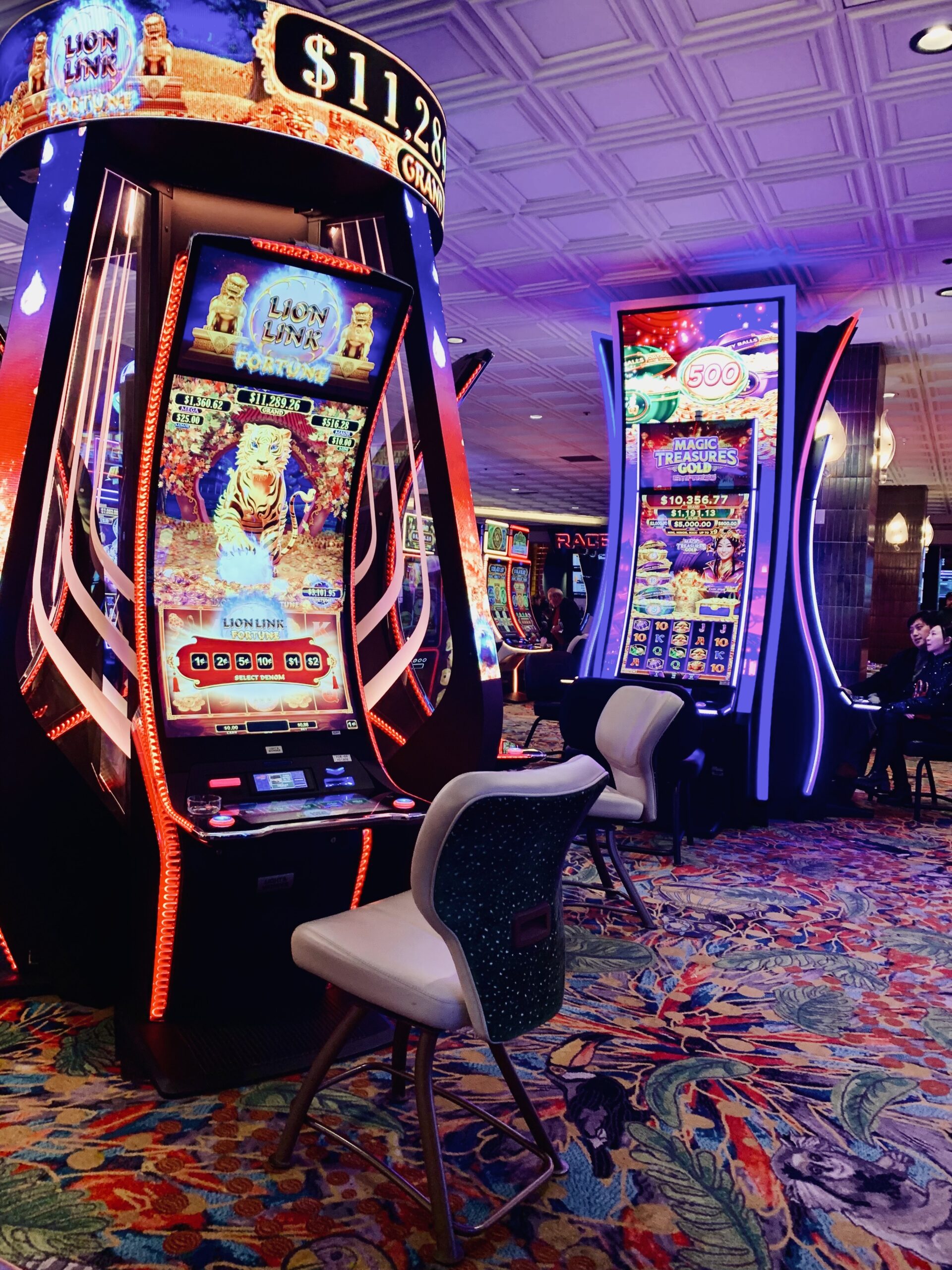
Editorial note: This article is a critical review of the direction of casino technology. It distinguishes between documented capabilities sold by casino-technology vendors and speculation about what casinos may do with them. Not every casino uses every system described here, and regulated slot outcomes remain subject to gaming rules and certified game logic. The concern here is not that artificial intelligence secretly picks your next spin. The concern is that casinos increasingly have the tools to understand your behavior, predict when you may leave, and decide what offer, bonus, message, host intervention, or challenge may keep you engaged.
The casino of the future is not just a room full of slot machines. It is a data system built around the player.
For decades, gamblers understood the basic relationship. You walked into a casino, put money into a machine, joined a players club if you wanted comps, and the casino tracked broad measures such as coin-in, average bet, time played, theoretical loss, and trip history. That model was already powerful. Now the industry is moving toward something far more sophisticated: real-time behavioral data, artificial intelligence, predictive analytics, hyper-personalized marketing, digital wallets, mobile apps, dynamic bonuses, automated hosts, and systems capable of reacting while you are still sitting at the machine.
That changes the balance of information dramatically.
The player sees a bonus wheel, a jackpot meter, a free-play offer, a tier challenge, a push notification, or a message from a host. The casino can increasingly see the history behind the player: how long you have been playing, what you bet, which games you prefer, how quickly you cycle money, whether your play is declining, how you responded to the last promotion, whether you are likely to return, whether you are moving toward VIP status, and whether a particular incentive may change your behavior.
This is the part of the modern gambling industry that deserves much more scrutiny.
Casino Technology Is Moving From Tracking to Prediction
Traditional casino management systems were built around tracking. Modern systems are being marketed around prediction and intervention.
IGT, one of the largest gaming technology companies in the world, now promotes AI-powered tools designed to move casino marketing from broad segmentation toward what it calls hyper-personalization. Its TrueAim platform says operators can use gaming-system data to create more impactful player offers, identify behavioral patterns, and act on information in real time.
IGT also promotes real-time, spin-level slot data through its newer systems. In its own materials, IGT gives examples of a casino being able to recognize when a high-limit player increases a wager, triggers a bonus, or goes through a losing streak and then respond with a reward, a host visit, or a comp offer.
That is a major change from the old model of waiting until the end of the day to calculate a trip and send a postcard weeks later.
Source: IGT TrueAim and IGT real-time data overview.
Foundation Software Goes Even Further
One of the clearest examples of where the industry wants to go comes from Acres Technology and its Foundation and Foundation HQ casino-management technology.
Acres describes Foundation as a real-time data platform that connects directly to slot machines and captures dramatically more information than older casino-management systems. The company says the platform can provide casinos with granular, real-time data and use it to analyze and influence player behavior.
Foundation is not being marketed as a passive accounting system. It is being marketed as a system that can help casinos respond to what the player is doing in the moment.
Acres says its technology can target bonuses to specific players, deliver rewards during losing streaks, send in-game promotions, create personalized incentives, write bonus credits to a machine, and use real-time events to trigger additional experiences. Foundation HQ materials also describe using historical and predictive benchmarks related to session duration, spend, and volatility.
That is the gambling industry’s future in one sentence: the casino is no longer just measuring what you did; it is trying to decide what to show you next.
Sources: Acres Foundation HQ whitepaper, Acres personalization overview, and Acres real-time data.
The Most Disturbing Part Is How Openly the Industry Talks About Increasing Spend
Casino technology companies do not hide the commercial goal behind these systems. The language is usually framed around engagement, loyalty, experience, retention, and personalization, but the economic objective is obvious: increase player value and increase casino revenue.
Acres describes its technology as a way to keep players engaged longer and increase casino profits. Its Foundation HQ loyalty materials argue that modernized loyalty can increase player spend and replace traditional free play with gamified experiences designed to encourage continued play with the customer’s own money.
Its Achievement Bonusing product is even more direct. Acres markets challenges that can require a player to keep wagering in order to unlock a reward. The company says the system can use player analytics to predict the probability that a customer will complete the challenge and win the bonus.
That is not science fiction. That is a product being sold to casinos.
Source: Acres Achievement Bonusing.
The Jackpot Chase Can Become a Data-Driven Product
Casino psychology has always relied heavily on anticipation. Progressive meters rise. Bonus symbols almost land. Free games tease the player. Tier meters creep toward the next level. Jackpots flash across giant displays. The customer is constantly being shown a reason to believe the next meaningful event may be close.
Modern technology adds another layer: the casino can increasingly personalize the chase.
A bonus does not necessarily have to be offered equally to everyone. A challenge can be tied to a particular player. A promotional jackpot can be triggered by an external event. A reward can appear after a specific pattern of play. A customer can receive a targeted incentive based on spend, predicted value, or previous behavior.
Acres says Foundation-powered systems can use trigger events to award bonus credits, run promotional jackpots, and personalize incentives. Its technology can also create achievement-based challenges informed by underlying player data.
This does not mean the casino can legally decide that your regulated base-game spin should lose because an algorithm knows you are willing to keep playing. That is an important distinction. The casino-management layer and promotional bonus layer are not the same thing as the certified random-number generator controlling the base game.
But the casino does not need to control the next spin to influence behavior. It can influence the environment around the spin.
That may be enough.
The Future Is Not Necessarily “Rigged Slots.” It Is Behavioral Engineering
I think the public conversation often focuses on the wrong fear.
Players ask whether casinos can remotely tighten a machine because they are winning. They ask whether an AI system can decide to stop a jackpot. They imagine a manager sitting in an office pressing a button every time somebody gets hot.
Those claims require evidence and should not be stated casually.
The more realistic concern is arguably more powerful: casinos may not need to alter regulated game outcomes if they can optimize everything surrounding the game.
They can decide which promotion to send you. They can decide when to send it. They can choose whether the message is free play, a multiplier, a tournament, a tier challenge, a jackpot event, a personalized host message, a food offer, or a bonus opportunity. They can measure whether you responded. They can then feed that response back into the next decision.
That is behavioral engineering at scale.
Your Loyalty Card Is Becoming a Behavioral Identity
Players club cards were once viewed as simple comp cards. That description is increasingly outdated.
A modern loyalty identity can connect gambling activity with an app, email, SMS, hotel activity, dining, online accounts, promotional history, and other customer information depending on the operator and what the player has agreed to provide.
PENN Entertainment’s current privacy policy, for example, says the company may collect identifiers, device and advertising identifiers, player or loyalty IDs, and play activity. The policy also says it may use information to personalize offers for individual patrons, deliver personalized advertising, analyze usage, administer loyalty programs, and assess responsible-gaming data.
That does not mean PENN is doing every possible form of profiling to every customer. It does show how broad the modern casino data environment can be.
Source: PENN Entertainment privacy policy.
Online Gambling Makes the Profile Even Richer
Land-based casinos can learn a lot from tracked play. Online gambling can generate even more behavioral signals because nearly every click occurs inside a digital environment.
Modern iGaming CRM platforms openly advertise artificial intelligence designed to personalize promotions using player behavior, deposit patterns, bet size, predicted churn, reactivation probability, and likelihood of becoming a VIP.
Optimove, for example, markets an AI personalization engine for gambling operators that can adapt promotions and messaging based on behavior and predicted attributes. Fast Track markets value models designed to estimate what a player is worth and what that player could become, while delivering the “right offer” at the “right moment.”
Sources: Optimove iGaming CRM and Fast Track.
From an operator’s perspective, that is efficient marketing. From a player’s perspective, it means the casino may know far more about your gambling habits than you know about the casino’s strategy for monetizing those habits.
Casinos Can Build a Profile of What Makes You React
The most valuable data is not simply what you played. It is what changed your behavior.
Did you return when a free-play offer doubled? Did you increase your bet after a jackpot notification? Did you stay longer when a host visited? Did you respond to a tier multiplier? Did you deposit after receiving a push notification? Did you leave after a losing streak? Did you come back when a bonus challenge appeared?
Every response can become another data point.
Over time, a sophisticated system can build a practical profile of the incentives that appear most likely to work on you. That does not require the casino to understand your personality in some science-fiction sense. It only needs enough historical data to recognize patterns.
If Offer A repeatedly gets you to return and Offer B does not, the system learns something valuable.
If a challenge requiring more play produces more revenue than a simple free-play gift, the casino learns something valuable.
If a host intervention stops you from leaving after a bad session, the casino learns something valuable.
The dangerous part is that the feedback loop can become increasingly precise while the player may have no idea it is happening.
Even Uncarded Play May Become Easier to Track
One of the most interesting claims in Acres’ Foundation HQ materials concerns players who are not using a loyalty card.
The company says its technology can identify and associate play sessions using transactional information such as bill or ticket insertions, rate of play, and cash-outs, creating a unique identifier for a session even before a player provides a name and contact information.
Acres presents this as a way for casinos to identify valuable uncarded players and encourage them to enroll in loyalty programs.
That should get the attention of anyone who assumes “I didn’t use my card, so the casino knows nothing about this session.”
Source: Acres Foundation HQ smart technology.
AI Can Make the Casino Host More Automated
The traditional casino host is a human relationship manager. The future may look more like a combination of human host and automated decision engine.
Acres describes an intelligent virtual-host concept that monitors player behavior and can react when a customer appears discouraged, bored, or under stress. The system can select an incentive such as a comp, prize, bonus opportunity, or human-host interaction and then measure the player’s response.
IGT similarly promotes systems that help operators act on real-time events rather than waiting for a trip to end.
This means tomorrow’s “host relationship” may not begin with a person deciding you deserve attention. A machine may identify the event first, score the customer, select the intervention, and tell the human what to do.
The Casino Knows Your Theoretical Value. Do You?
This asymmetry is one of the biggest problems I have with the casino business.
The casino can calculate theoretical win. It can estimate your value. It can track how often you visit. It can measure time on device. It can evaluate game performance. It can see which promotions work. It can increasingly react to your behavior in real time.
The player frequently cannot even see the exact RTP of the slot machine in a clear, prominent place.
Think about how absurd that is.
One side of the transaction is building predictive models. The other side may not even know the theoretical return of the product being purchased.
Gamification Is Becoming a Second Game on Top of Gambling
The gambling product used to be the game itself. Increasingly, the loyalty program is another game layered on top.
Tier points. Badges. Progress bars. Challenges. Streaks. Missions. Mystery rewards. Multipliers. Limited-time offers. Tournaments. Unlockable benefits. Personalized achievements.
These systems are familiar because they are used throughout mobile gaming, social media, retail loyalty, and online commerce. The difference is that in a casino, progression may be tied to actual monetary wagering.
Acres markets Achievement Bonusing as a “game within a game” where players can be challenged to complete specific milestones to unlock rewards. Online gambling CRM companies similarly promote progression systems, badges, mini-games, and personalized incentives to increase engagement.
The psychological danger is obvious: a player may stop thinking about whether another wager is rational and start thinking about whether another wager completes the challenge.
The Jackpot Does Not Have to Be Close for the Chase to Feel Close
Jackpot design has always exploited anticipation. Technology can make that anticipation more persistent.
A player can be shown a progressive meter, an achievement countdown, a personalized challenge, a tier meter, a bonus eligibility requirement, and a time-limited promotion at the same time.
None of those systems has to lie. The jackpot may be real. The challenge may be real. The reward may be real.
The issue is how many simultaneous reasons the system can create for the player to postpone leaving.
“One more spin” becomes “I am almost at the tier.”
“I should cash out” becomes “I only need 400 more points.”
“This session is bad” becomes “I have a bonus challenge active.”
“I am done for today” becomes “my free play expires tonight.”
Technology does not need to force anyone to gamble. It only needs to keep creating reasons not to stop.
The Industry Will Call This Personalization
Casino vendors understandably describe these systems positively. They use terms such as personalization, guest experience, engagement, loyalty, real-time service, relevance, and entertainment.
Those benefits are real. Technology can make service faster. It can identify broken machines. It can deliver rewards instantly. It can reduce irrelevant marketing. It can help identify harmful play. Some of the same data used to increase engagement can also be used for responsible-gambling interventions.
But we should not pretend the commercial incentive disappears because the experience is personalized.
The casino business earns money when customers gamble. A system that makes customers more engaged, more loyal, more likely to return, or more likely to continue wagering has direct economic value to the operator.
That conflict should be discussed openly.
Responsible Gambling Will Become Part of the Same AI System
There is an important counterargument. Better behavioral data can also identify harmful patterns earlier.
Acres says its systems can detect signs of excessive stress and reduce incentives that require additional spending when a player approaches an affordable budget. IGT and other suppliers also describe responsible-gaming tools that can identify excessive gambling patterns or support player protections.
This is potentially valuable.
But it creates a difficult question for the industry: what happens when the same system is capable of predicting both the moment a player may be vulnerable to leaving and the moment a player may be vulnerable to gambling too much?
The ethical answer should be obvious. Player protection has to win.
The commercial incentives, however, make that an area regulators should watch closely.
Regulators Need to Catch Up With Casino AI
Gaming regulation has traditionally focused heavily on game integrity: certified RNGs, payout rules, accounting systems, security, licensing, and whether a machine operates according to approved mathematics.
Those protections remain essential.
But the next regulatory battle may be about behavioral systems rather than game math.
Regulators should be asking:
- What player data is collected in real time?
- How long is behavioral data retained?
- Can operators build profiles of uncarded play?
- What types of predictive models are used to target promotions?
- Can a casino identify a losing streak and immediately send an incentive?
- What safeguards prevent vulnerable players from receiving aggressive retention offers?
- Should personalized wagering challenges require additional disclosures?
- Should players be allowed to opt out of behavioral personalization while still participating in a loyalty program?
- Should casinos disclose when an offer was generated by an automated model?
The industry is moving quickly. Regulation cannot assume the casino-management system of 2030 looks like the one from 2005.
The Future Casino May Know When You Are About to Leave
The most important shift is timing.
Old casino marketing reacted after the trip.
The future reacts during the trip.
If a casino can detect that your play is slowing, your average bet is dropping, your losses are mounting, or your engagement is declining, it may be able to intervene before you stand up.
That intervention could be a drink. A host. A bonus. A challenge. A digital message. A promotional jackpot. A reminder of tier progress. A free-play reward. A new game suggestion.
Each individual action may seem harmless. Combined, they create a system designed to reduce the number of moments where a customer simply disengages and walks away.
My Problem With the Future of Gambling
I have no problem with technology itself. I have a problem with a casino industry that may know more and more about the customer while the customer still knows very little about the casino.
The casino may know your theoretical value.
The casino may know your favorite games.
The casino may know when you usually visit.
The casino may know which offers make you return.
The casino may know whether your play is increasing or declining.
The casino may know whether you respond to free play, jackpots, multipliers, or host attention.
The casino may increasingly know when you look like you are about to quit.
Meanwhile, you may not know the exact RTP of the machine.
That is the imbalance.
Players Need to Start Thinking Like the Algorithm
The best defense is understanding what the system wants.
The casino wants more profitable play, more frequent visits, more loyalty, more measurable engagement, and better retention. That does not make every casino evil. It makes the casino a business.
Players should treat every personalized promotion as an economic offer, not a gift.
- Ask how much wagering is required to unlock it.
- Ask whether the reward changes behavior you otherwise would not change.
- Track your coin-in and actual losses.
- Do not chase a tier because a progress bar says you are close.
- Do not assume a targeted bonus means the casino values you more than your expected profitability.
- Do not continue a losing session merely because another reward appeared.
- Remember that personalization is designed around what the operator believes will influence you.
Final Verdict: The Casino of the Future Is a Behavioral Platform
The future of gambling is not simply bigger screens, better graphics, cashless wallets, and prettier slot machines.
It is the convergence of gambling, data science, AI, loyalty, behavioral analytics, and real-time marketing.
Acres Foundation shows how granular slot data can be used to trigger personalized bonuses and challenges. IGT is marketing spin-level real-time intelligence and AI-powered personalization. Online gambling CRM platforms are using predictive models to target promotions according to behavior, value, and churn probability. Major operators openly disclose that player activity and loyalty data may be used to personalize offers and advertising.
The technology is not theoretical anymore.
What remains uncertain is how aggressively each casino will use it, how much regulators will require operators to disclose, and whether player-protection systems will evolve as quickly as revenue-optimization systems.
The casino industry’s most powerful future product may not be a new slot machine at all.
It may be the profile the casino builds about the person sitting in front of it.

Leave a Reply