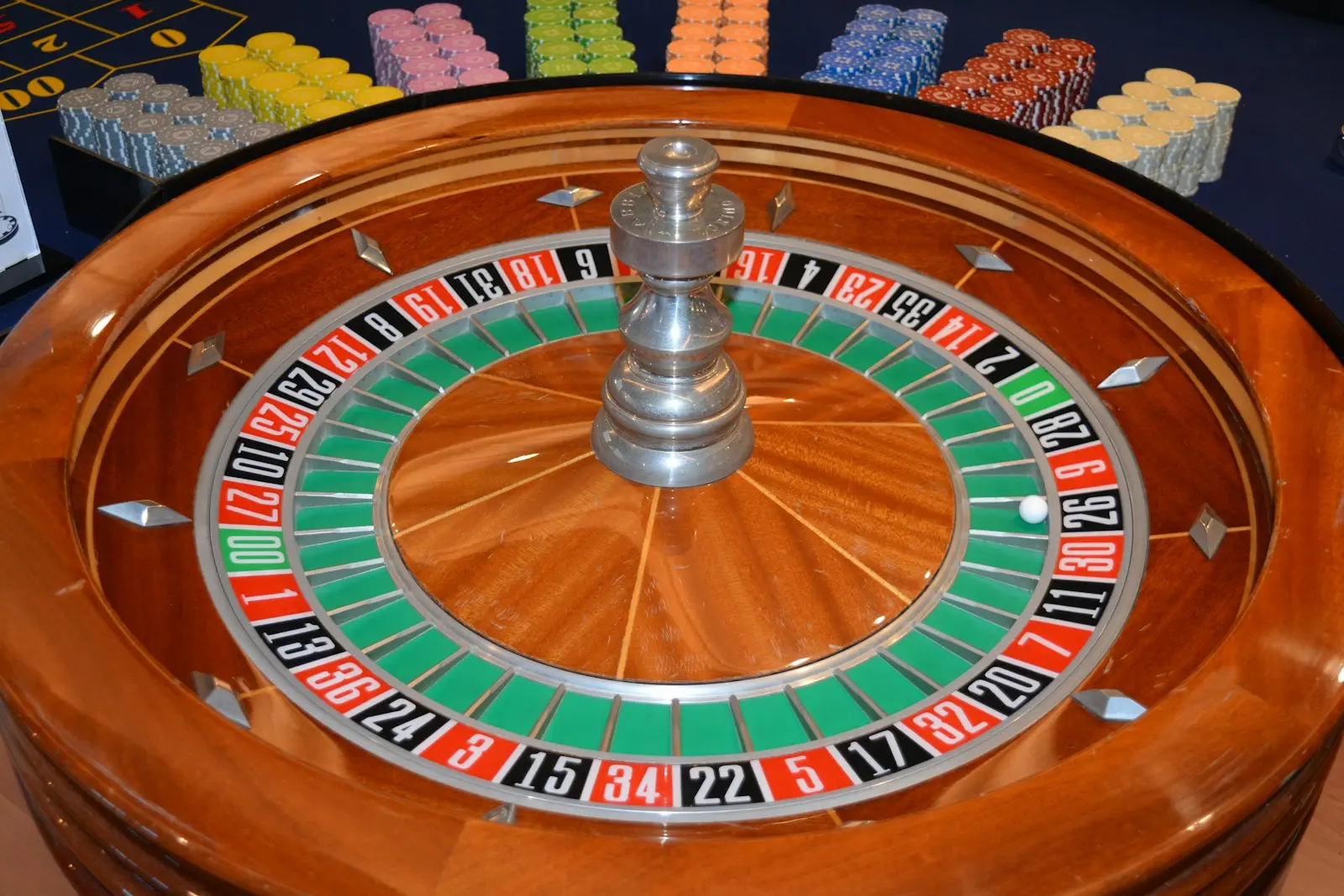
Christopher Mitchell’s roulette strategy might look convincing when the wins are rolling in. But what happens when the progression fails, losses continue, and the bankroll hits zero? That’s what we investigate in this Santi Casino Quest breakdown. Roulette influencers often recommend doubling after losses, following patterns, or chasing a recovery spin. The mathematical issue is simple: betting progressions cannot remove the casino’s house edge.
Watch the full Christopher Mitchell Roulette Strategy EXPOSED video on YouTube.
1. Christopher Mitchell Roulette Strategy: What’s Really Happening?
In my latest Santi Casino Quest investigation, I examine roulette gameplay involving increasing wagers, losing spins and an escalating progression. The purpose isn’t to attack anyone personally; it’s to explain the financial risks of a method that appears successful until the bankroll can’t support it. A winning session doesn’t establish a repeatable mathematical advantage, and a sequence of successful progressions doesn’t eliminate the chance of catastrophic losses. We must ask how much capital the system needs and what happens during an extended losing streak. The wheel doesn’t know the player has doubled the bet, doesn’t know what they’ve lost and doesn’t care about their recovery target. The next outcome remains independent of their financial circumstances.
2. Martingale: The Betting System That Looks Too Easy
The classic Martingale starts with an even-money wager such as red or black. After every loss, the player doubles the next bet, hoping the next victory will recover previous losses and produce a small profit. Imagine beginning at $25. Your sequence becomes $25, $50, $100, $200, $400, $800, $1,600 and $3,200. After seven consecutive losing wagers you’ve lost $3,175, and the next bet must be $3,200. Even if that next bet wins, the entire progression earns only $25 net.
| Spin lost | Wager | Total lost |
|---|---|---|
| 1 | $25 | $25 |
| 2 | $50 | $75 |
| 3 | $100 | $175 |
| 4 | $200 | $375 |
| 5 | $400 | $775 |
| 6 | $800 | $1,575 |
| 7 | $1,600 | $3,175 |
| 8 | $3,200 | $6,375 |
That exposure grows exponentially. Many progressions end in small wins, which is why the system feels reliable. But occasional extreme losses can erase dozens of successful recoveries. Table maximums and finite bankrolls mean you cannot double forever. The strategy doesn’t change the payout odds; it changes the size and timing of your financial risk.
3. The Double-Zero Problem: American Roulette’s House Edge
This is one of the most important moments in the reaction video. A standard American roulette wheel has 38 pockets: 18 red, 18 black, one green zero and one green double zero. Betting red or black isn’t a true 50/50 proposition. Each color wins only 18 out of 38 outcomes—approximately 47.37%. The other 20 outcomes lose, creating a 52.63% chance of losing a standard even-money bet. That difference gives the casino a theoretical 5.26% house edge.
For every $100 wagered on red, the expected loss is about $5.26. This isn’t a guarantee of losing $5.26 on any particular spin; it’s a long-run average across comparable bets. European roulette has one zero and usually a 2.70% house edge. American double-zero roulette therefore has nearly twice the disadvantage. Whether you stake $10 or $10,000, doubling your wager doesn’t change the 18-out-of-38 probability. The math is explained in the Wizard of Odds roulette mathematics guide.
4. Watch the Progression Fail
At around 1:41 in my breakdown, I highlight a losing spin after a wager has been increased. Watch this sequence directly. The central issue is the relationship between the growing wager and the remaining bankroll. The player may believe doubling again will recover earlier losses. But previous bets are already settled. They’re sunk costs, and their outcomes don’t improve the next spin. The next wager is an entirely new risk. Once the sequence goes badly, stopping feels like accepting defeat and doubling feels like preserving hope. That’s the psychological trap of an aggressive progression.
A rational analysis asks what the system risks in exchange for its target profit. How large can the drawdown become? What if five losses happen, or eight? What happens if the next required bet exceeds the table maximum? A progression that has no workable answer to those questions isn’t a dependable way to generate income.
5. Why Previous Winning Numbers Don’t Predict the Next Spin
At about 2:02, I freeze the roulette table and review previous numbers. Watch the number-board analysis. Many gamblers stare at the last 10, 20 or 50 outcomes looking for patterns. A long sequence of black numbers can make red seem overdue. But on a properly functioning wheel, each spin is independent. Seven blacks in a row do not raise red’s chance above 18 in 38 on a standard American wheel.
The belief that an opposite outcome becomes due after a streak is called the gambler’s fallacy. Hot and cold numbers describe historical frequency; they don’t automatically reveal what happens next. Random sequences often contain surprising clusters and long gaps. Treating them as guaranteed forecasts becomes especially dangerous when combined with escalating stakes.
6. The Final Knockout Spin
Around 3:07, the video examines the final bankroll-loss sequence. Watch the knockout-spin breakdown. The purpose isn’t simply to ridicule a losing gambler. Anyone who gambles can experience losses. The point is to show how quickly increasing bets can make a progression impossible to sustain.
With a $100 starting wager, six consecutive losses in a traditional Martingale sequence total $6,300. The next required bet would be $6,400. A player with a $10,000 starting bankroll cannot continue under those conditions without adding funds. Casinos don’t need to win every spin; they only need their mathematical advantage to persist across wagering volume. The gambler, meanwhile, must contend with bankroll limits and potentially devastating drawdowns.
7. Why a 90% Win Rate Can Still Lose Money
Imagine 100 hypothetical betting sessions: 90 win $50 each and ten lose $1,000 each. The wins generate $4,500, while the losses cost $10,000. The system ends with a $5,500 loss despite a 90% winning-session rate. Win percentage is not the same as profitability. A serious audit must examine average wins, average losses, total capital risked, maximum drawdown, and overall expected value.
For a $100 standard American roulette red bet, expected value is (18/38 × $100) − (20/38 × $100), or approximately −$5.26. Changing your wager size doesn’t transform that negative expectation into a positive one. It only reshapes the distribution of gains and losses.
8. The Psychology of Chasing Losses
Betting systems feel convincing because they give players instructions, a plan and a sense of control. A bankroll spreadsheet can look sophisticated. A series of quick recoveries can seem like evidence. Yet organized betting is not automatically advantageous betting. The player may remember dozens of little wins more vividly than one disastrous loss, or feel that the next bet must be placed to reclaim money already gone.
Loss chasing can turn recreational gambling into a financial emergency. The previous loss shouldn’t dictate the size of the next wager, especially when the stakes threaten money needed for rent, bills or family necessities. Accurate records and strict recreational spending limits can help reveal risk, but neither changes the house edge.
9. How Genuine Advantage Play Differs
At approximately 4:07 in my video, I turn to promotional advantage play. Watch the explanation here. Unlike a roulette progression, certain promotions can change the economics of a betting opportunity. Welcome offers, reload bonuses, cashback and bonus bets may have a measurable monetary value that exceeds the costs of qualifying for them. But not every bonus is profitable and none should be assumed risk-free.
Calculations must account for minimum odds, bonus-stake treatment, wagering requirements, expiration, fees, withdrawal restrictions and account eligibility. Odds can move, bets can be voided and mistakes can create losses. Positive expected value and guaranteed profit are not synonymous. Tools that compare promotional opportunities may help organize research, but users should independently check every assumption and restriction before participating.
10. What Viewers Should Ask Casino Influencers
Casino entertainment and casino education are different products. A few winning sessions do not prove a long-term edge, and a losing video does not by itself prove a creator has never made money. What matters is evidence. Does the method actually change the house edge? Are losing sessions included in the advertised results? How much capital is needed? Where does the progression stop? Are payouts and risks independently verifiable? And is the content being sold as entertainment or dependable income?
These questions apply to Christopher Mitchell, other creators and Santi Casino Quest alike. Nobody should get a free pass from mathematical scrutiny. If someone claims to have a reliable gambling income system, the responsible response is to look beyond confidence and request complete records, realistic assumptions and transparent expected-value calculations.
11. Can Roulette Be Made Less Expensive?
Players who choose roulette for entertainment can still compare house edges. Single-zero European tables generally offer better mathematical conditions than standard double-zero American wheels. Some French roulette rules, such as la partage, can reduce losses on qualifying even-money bets. Avoiding particularly unfavorable specialty bets also matters: the American five-number bet has a 7.89% house edge.
None of these changes guarantees winnings. They simply limit unnecessary disadvantages. Setting a spending cap and accepting that losses are a possible cost of entertainment are more realistic than believing any progression makes roulette a dependable source of income. Stop-loss rules can cap a session’s budget, but they do not improve the expectation of the wagers themselves.
12. Final Verdict: Doubling Does Not Beat Roulette
My conclusion from the Christopher Mitchell roulette breakdown is straightforward. A doubling progression can win individual sessions and can produce plenty of small recoveries. But it cannot eliminate the American wheel’s two green zeros, make past spins predict the future or remove the casino’s house edge. Its biggest weakness is requiring rapidly increasing capital to pursue relatively small profits.
That’s why the footage matters. The growing stakes, losing sequences and final bankroll consequences illustrate how the strategy can become financially unsustainable. If you’re investigating gambling mathematics, study expected value and bankroll exposure instead of searching for magical patterns. If you’re evaluating promotions, read every term and calculate the actual economics. And if you’re gambling recreationally, never chase losses using money needed for essential expenses.
The Actual Christopher Mitchell Roulette Footage: From $1,000 to Zero
The video that sparked this investigation is not a hypothetical simulation. In the source clip, Mitchell announces a $1,000 starting bankroll and then studies the roulette history display. He notices multiple consecutive outcomes in the second dozen, the range covering numbers 13 through 24. Instead of viewing that history as a description of completed independent spins, he treats it as a reason to wager against the streak. As he narrates, his opening position places $25 on the first dozen and $25 on the third dozen, a $50 combined wager. The next result does not deliver the recovery he wants. His response is to increase exposure rather than reconsider the premise. The source recording later shows larger total bets, including a roughly $200 position and a reported $740 exposure, while the account balance ultimately reaches zero. That is the case study behind my reaction: a relatively modest opening position becomes a substantial share of the account within a few losing results.
The distinction between what Mitchell says and what we can independently prove matters. His video documents the demonstrated bankroll outcome; it cannot establish the profitability or unprofitability of his entire lifetime gambling history. It does, however, give us a concrete example of how an aggressive progression responds to outcomes that refuse to cooperate. Look at the fraction of available cash committed at each stage. A $50 opening risk represents five percent of a $1,000 bankroll. A $200 bet represents twenty percent of the original bankroll. A $740 exposure represents seventy-four percent of the starting amount. With the balance already reduced by earlier losses, that final exposure consumes an even more severe share of remaining money. One or two unfavorable outcomes can therefore end the session before any supposed long-run advantage has had a chance to appear.
The Two-Dozen Bet Is Not an Even-Money Bet
One important technical clarification is missing from many discussions of this clip. Although my voiceover criticizes Martingale-style doubling and references the American wheel’s green zero and double zero, Mitchell’s footage specifically discusses betting the first and third dozens, not merely picking red or black. A single dozen covers twelve numbered pockets. Two dozens cover twenty-four numbered pockets. On the 38-pocket American wheel, that combined position has a 24-in-38 chance of producing a winning spin, approximately 63.16 percent. A losing spin occurs when the ball lands in the uncovered dozen or either green pocket, giving 14-in-38, approximately 36.84 percent.
That relatively high hit rate can be psychologically persuasive. Players hear that the bet succeeds almost two-thirds of the time and mistake the higher win frequency for a favorable wager. But the payout is smaller than the loss when both dozens are covered. Suppose you put $25 on each of two dozens. If one of your covered dozens wins, that $25 bet returns a $50 profit while the other $25 stake loses, for a net $25 gain. If neither covered dozen wins, both bets lose for a $50 loss. Your expected result per $50 combined stake is therefore (24/38 multiplied by $25) minus (14/38 multiplied by $50), which equals about negative $2.63. Divide by the total $50 at risk and you recover the familiar 5.26 percent house edge. This is why win probability must be evaluated alongside the net payout; the impressive-looking 63 percent is not a path around roulette mathematics.
The Numbers That Made the Streak Look Irresistible
In the source footage, Mitchell counts repeated second-dozen outcomes and calls attention to the streak. He later recites numbers including 19, 18, 24, 16, 17 and 22. These are all second-dozen numbers. Seeing them lined up on a results board creates the strong impression that the next number ought to come from the first or third dozen. But a display full of consecutive second-dozen outcomes changes nothing about a fair wheel’s next-spin distribution. The first and third dozens still cover twenty-four pockets out of thirty-eight. The second dozen still covers twelve. Zero and double zero still occupy two more pockets.
The probability of missing a two-dozen wager on any particular spin is 14/38, roughly 36.84 percent. If the wheel’s spins are independent, the probability that the same two-dozen position loses three consecutive times is (14/38) cubed, about five percent. That is uncommon over one fixed three-spin block, but certainly not impossible. A gambler who plays hundreds or thousands of sequences gives such events many opportunities to occur. More important, after a streak is observed, the probability of the next miss stays 14/38; it does not shrink because the earlier misses felt painful or improbable. Selecting the starting moment after noticing a pattern also creates hindsight bias. Players remember the streak that seemed extraordinary and overlook other sequences that ended quietly.
What the $50, $200 and $740 Sequence Really Shows
A classic even-money Martingale mechanically doubles after each loss. A two-dozen progression is not identical because winning two dozens creates a net profit equal to half the combined stake, whereas losing them costs the full combined stake. Consequently a simple doubling of the total two-dozen stake does not necessarily restore every prior loss plus the original desired profit. After a $50 two-dozen loss, placing $100 total on those same two dozens and winning produces only $50 net on that new spin, leaving the two-spin sequence at break-even. To recover the prior $50 loss and make an additional $25, a winning two-dozen stake must generate $75 net, requiring a combined $150 wager under the same split. A further loss raises the recovery requirement sharply.
This is a crucial reason not to describe the video as a mathematically exact red-black Martingale. The on-screen stakes and the creator’s descriptions matter more than a convenient label. We can fairly call it a progression or Martingale-like loss-chasing system while explaining its actual payoffs. In the source recording, Mitchell discusses increasing his earlier bets and a maximum reported exposure around $740. The bankroll depletion is compelling evidence of that session’s vulnerability, but the precise amount at risk on each spin should be taken from the recording rather than reconstructed as a perfect textbook doubling ladder. My criticism concerns the general decision rule: when a negative-value bet loses, adding more money to the same negative-value proposition compounds exposure rather than manufactures an edge.
His Explanation After the Loss: Did the Wheel Know He Was Alone?
The closing remarks in the source recording make an especially revealing teaching moment. After the bankroll reaches zero, Mitchell says he should not have played roulette alone and suggests that the wheel knew he was the only participant. Viewers can hear that explanation in the original footage; it is his claim, not an established fact about how roulette machines operate. In a properly regulated random roulette game, another customer’s presence does not change the mathematical probability of the numbers. The machine does not need to recognize whether someone is watching, whether the player feels unlucky or how much money the player has lost. Ordinary statistical variance, combined with escalating bets, is sufficient to explain an account being wiped out.
That is why the excuse matters beyond the comedy of the moment. When a betting theory succeeds, its promoter may credit personal skill or a special system. When the very same process fails, the explanation can shift to conditions that cannot be independently measured. A sound gambling strategy has to specify its predictions and its failure conditions in advance. If almost any loss can be explained away after the fact, the claim is insulated from scrutiny. The right question is not whether a roulette wheel likes company; it is whether the predicted payout, probability and risk exposure show a genuine positive mathematical expectation. For ordinary American roulette dozens, the answer is no.
The Cost of a Losing Streak Is Not Just the Final Bet
The biggest danger in progression play is sometimes hidden by the final screen displaying a zero balance. Losing the last wager is only the visible ending of a chain of decisions. Each previous unsuccessful wager reduced the bankroll, and each larger follow-up commitment increased the amount necessary to recover. This also creates opportunity cost: money committed to rescuing a losing sequence cannot be saved, used for essential obligations or deployed for another purpose. One session can consume the capital intended to fund many future recreational sessions.
Imagine the player wins five small two-dozen cycles, collecting $25 each time. That is $125 in cumulative profits. A single $200 losing wager would more than erase those gains, even before counting any earlier losses in its particular progression. The player could accurately advertise five winning sessions, but that headline would reveal almost nothing about the account’s overall result. This is why screenshots of winning tickets, videos celebrating streaks and claims about a high hit rate require full-account context. A serious record tracks deposits, withdrawals, every wager, settlement, fees and all losing stretches. The numerator in an advertised win percentage is not the complete story. Dollar-weighted outcomes are the metric that ultimately matters.
A Simple Expected-Value Audit Anyone Can Reproduce
You do not need a secret spreadsheet to test the underlying claim. Start by writing down every possible mutually exclusive outcome, its probability and the net profit or loss if it happens. For a two-dozen $50 bet on an American wheel, the winning outcome nets $25 with probability 24/38; the losing outcome costs $50 with probability 14/38. Multiply each outcome by its chance and add the results. The answer is negative $2.63 per $50 wager. Repeating the same basic position one hundred times creates $5,000 in turnover and an expected loss of about $263 before any other costs, regardless of how the sizes are rearranged across spins.
The conditional sizing strategy does not rescue the model. When the next wager is determined by previous outcomes, its expected return is still negative given the available information if the wheel is fair and the payoff schedule is unchanged. Betting more after a loss simply scales the size of the next negative expectation. It can be useful to run Monte Carlo simulations to visualize possible short-run results, but simulations cannot reverse the sign of the mathematical expectation. The goal of the audit is not to predict the exact date of failure or guarantee a particular streak. It is to identify how much money is at risk, why the player thinks the probabilities have changed and whether the accounting ever shows a real edge.
The Bigger Point of My Video: Promotion Math Versus Roulette Patterns
The second half of my Santi Casino Quest video changes the subject from the wheel to promotional economics. This is not an invitation to chase losses through a different app. It is a comparison between altering the size of negative-expectation wagers and evaluating a promotion whose terms might change the net expected return of a particular transaction. Some sportsbook welcome bonuses, reload offers, free bets and odds boosts create measurable promotional value. But their face values are not automatically cash values, and their true worth depends on restrictions. A bonus bet that returns only winnings, for instance, is generally worth less than an unrestricted cash stake of the same stated size.
An advantage-play analysis begins with the written terms rather than with a hype-filled claim about guaranteed money. Check where the promotion is legally available, whether the account qualifies, whether the bet type counts, the minimum odds, stake return rules, the time remaining, and the conditions for withdrawal. Consider whether the hedge market has enough liquidity, whether published prices have moved and whether both sides can actually be executed. Only after tallying these details can a person estimate positive expected value or, in a narrow fully covered situation, a bounded profit. Betting errors, voids, platform rules and execution problems can still defeat the planned result. A calculator is a decision aid, not an assurance that every promotion is profitable.
Why Line Shopping and Matched Betting Are Different
Line shopping means comparing offered prices for the same event among different legal providers. It can improve the value of a wager without changing the athlete’s performance or inventing a predictive pattern. Matched betting usually involves combining a qualifying promotion with offsetting wagers so that the results across different outcomes are more predictable. That requires more work than merely finding two team names: the outcomes, settlement rules, overtime rules, player eligibility and possible void conditions must align. A superficially balanced wager may still have uncovered scenarios, higher-than-expected fees or account-limit problems.
The word guaranteed should therefore be used with care. A genuine arbitrage calculation can show positive theoretical payouts across listed outcomes, yet real-world execution may fail. Certain promotions also prohibit hedging or otherwise restrict eligibility, so assuming every published offer can be used in this way is misleading. In the video I contrast this research-first approach with roulette progression systems because the source of a possible edge is different. In roulette, a staking pattern does not alter the probability or payout of the wheel. In a promotion, the contractual incentive may add value to the transaction. The existence of promotions does not mean casinos hand out free money to everyone or that losses are impossible.
What the Video Says About Gambling Influencer Accountability
The point of scrutinizing Mitchell’s recorded roulette session is larger than one personality. When online creators market gambling methods as a path to income, the public should insist on rigorous evidence. A live clip can reveal how a strategy operates under stress; it cannot replace an independently audited long-term record. Equally, a highlight reel of winning spins cannot establish profitability. Any creator teaching a staking system should disclose its mathematical basis, maximum anticipated loss, minimum required bankroll, potential for ruin and limits on extrapolating from a small sample.
That standard applies to my own coverage. Viewers deserve a distinction between witnessed footage, a creator’s self-description, a calculation we can verify and an opinion about what the footage suggests. I can be sharp and critical when the math is weak while still avoiding claims about someone’s overall character or private finances that a clip cannot substantiate. In this particular recording, the relevant facts are the chosen dozens, rapidly increased exposure, exhausted bankroll and post-loss explanation. Those are enough to build an educational case study without embellishment. The takeaway is neither that losing once is scandalous nor that successful gamblers never have downswings; it is that promises of systematic profit have to survive the actual probability model.
Lessons to Take Away Before Your Next Roulette Session
First, read the wheel: single-zero and double-zero roulette do not share the same theoretical cost. Second, analyze the actual bet rather than relying on slogans such as almost fifty-fifty or a sixty-three-percent win rate. Third, distinguish a winning spin from a winning strategy. Fourth, inspect the largest possible commitment in a betting sequence, not just the advertised base stake. Fifth, reject the notion that several identical past outcomes make an opposite outcome due. Sixth, treat a session result as one observation rather than a scientific validation of a gambling system.
If you choose to gamble for entertainment, an amount set aside for that purpose should be affordable to lose entirely. Stop when the budget is gone instead of raising the bet in an attempt to erase the loss. Do not wager money earmarked for housing, debt payments, childcare or other essentials. If gambling is beginning to feel compulsory or is creating financial harm, taking a break and getting support are better responses than searching for a more aggressive progression. That conclusion may not be as exciting as a roulette guru’s secret formula, but it is consistent with both the arithmetic and the sequence captured in this video. The strongest tool a player has is an accurate understanding of what the game can and cannot provide.
Frequently Asked Questions
Does Christopher Mitchell’s roulette strategy work?
A progression can generate winning sessions, but betting more after losses does not change roulette’s underlying house edge. The video examines the risk of a progression that ends in bankroll exhaustion.
What is the Martingale roulette strategy?
Martingale typically doubles the next wager after a loss and returns to the initial wager after a win. Its downside is rapidly escalating bet sizes and exposure to large losing streaks.
Can you beat roulette by doubling every bet?
Doubling alone does not overcome the house edge. The required stakes can eventually exceed a player’s bankroll or the table maximum.
Are red and black 50/50 in American roulette?
No. Each has an 18-out-of-38 probability because of the zero and double zero, approximately 47.37%.
Can previous roulette numbers predict future spins?
Not reliably on a properly functioning wheel with independent outcomes. Past results describe history rather than guarantee the next result.
Is advantage play the same as Martingale?
No. Martingale changes stake sizes, while genuine advantage play identifies conditions that may improve expected value, including some promotional structures.
Watch the Full Santi Casino Quest Investigation
Watch Christopher Mitchell Roulette Strategy EXPOSED on YouTube and subscribe to Santi Casino Quest for casino investigations, roulette mathematics and advantage-play education. Explore more coverage at SantiCasinoQuest.com.
Editorial note: This article provides critical commentary on publicly discussed gambling gameplay and mathematics. It does not allege fraud or misconduct by any individual. Gambling involves financial risk; no system guarantees profit. Adults of legal gambling age only. For gambling support in the United States, visit 1-800-GAMBLER.

Leave a Reply