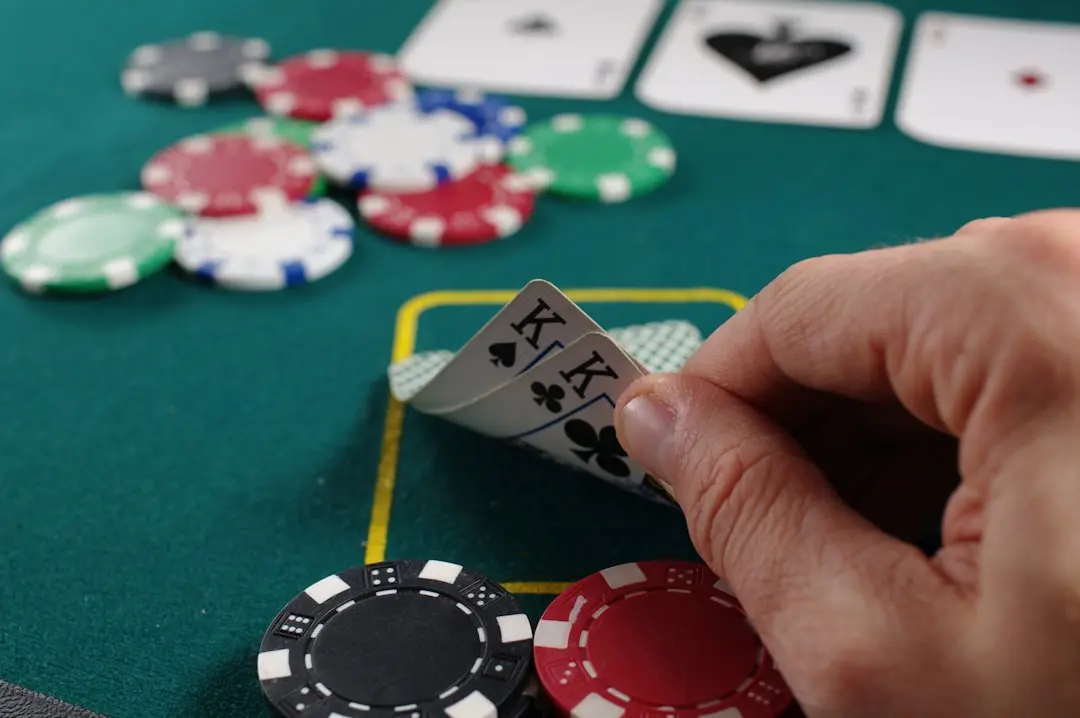
Double Bonus Poker takes the familiar structure of Jacks or Better and shifts more of the return toward four-of-a-kind hands. That creates a game with more dramatic premium hits, more strategic exceptions, and more short-term volatility. The strongest classic schedule is commonly called 10/7 Double Bonus because a full house pays 10-for-1 and a flush pays 7-for-1. With the right schedule and highly accurate play, the theoretical return can reach roughly 100.17%.
That number is why full-pay Double Bonus has historically attracted serious video poker players. But a theoretical return above 100% does not mean the game is a guaranteed money machine. The published return assumes the exact full-pay schedule, maximum-coin royal value, near-perfect strategy, and an enormous sample. Casinos commonly offer weaker versions, and the higher variance of Double Bonus can create severe bankroll swings long before the long-run average becomes meaningful.
What Makes Double Bonus Poker Different?
The core difference is the four-of-a-kind schedule. Instead of paying the same amount for every quad, Double Bonus pays more for certain ranks, especially aces and low quads. Those premium quad payouts are funded partly by reducing the payout on two pair, which commonly pays only 1-for-1 rather than 2-for-1 as it does in Jacks or Better.
That tradeoff changes strategy. In Jacks or Better, two pair is a stable 2-for-1 winner. In Double Bonus, two pair is less valuable, while trips and paired structures that can grow into premium quads become more important. The game therefore feels “swingier” even when its theoretical return is excellent.
What Does 10/7 Mean?
The 10/7 label refers to the full-house and flush payouts on the classic full-pay schedule: 10 units for a full house and 7 for a flush. Those two numbers are the first thing experienced players look for. A machine that pays 9/7, 9/6, or another reduced schedule may still be playable recreationally, but its long-run return is lower and its optimal strategy can differ.
Never rely on the game title alone. “Double Bonus Poker” tells you the family. The pay table tells you the actual game you are buying.
Why Four of a Kind Matters So Much
In many Double Bonus schedules, quads are divided into groups. Aces receive the highest standard four-of-a-kind payout, deuces through fours receive another premium, and fives through kings receive a lower but still enhanced quad payout. The exact values vary by schedule.
These distinctions affect which cards you hold. A pair of aces can be worth more than an apparently attractive four-card straight or flush draw because the upside of improving to quad aces is substantial. The same logic can apply to low pairs depending on the exact hand and pay table.
Do Not Use Jacks or Better Strategy
The visual similarity between the games causes expensive mistakes. Both games use the same 52-card deck and familiar hand ranks, but the payout weights are different. Strategy is simply a ranking of expected values. Change the payouts and that ranking changes.
A Jacks or Better chart can misplay Double Bonus hands involving two pair, low pairs, ace combinations, straight draws, and four-card flushes. Use a chart or trainer specifically designed for the exact Double Bonus schedule you are playing.
The Royal Flush Still Matters
As with most traditional video poker, the royal flush can account for a meaningful part of total return. Many machines pay a large bonus only when the maximum number of coins is wagered. If the five-coin royal is 800-for-1 but lower coin levels pay only 250-for-1, the full published RTP assumes you are receiving that maximum-coin bonus.
If the five-coin bet is too large at your current denomination, reduce the denomination rather than automatically playing fewer coins. Protecting bankroll and preserving the royal schedule can both matter.
Two Pair Is Weaker Than Many Players Expect
One of the most important psychological adjustments is accepting that two pair is not as valuable in Double Bonus as in Jacks or Better. The lower two-pair payout means the game shifts return toward bigger, less frequent hands.
That does not mean you should routinely break two pair. It means the expected-value gap between two pair and competing draws changes, and a Double Bonus strategy chart must be used when close exceptions arise.
Aces Deserve Special Attention
Aces are premium quad cards. When you hold a pair or three aces, the possibility of finishing with four aces carries more value than an equivalent structure made from ordinary ranks. This can cause strategy differences that feel unintuitive to players coming from Jacks or Better.
For example, adding unnecessary kickers to a pair of aces is usually a mistake because it reduces the number of replacement cards and therefore reduces your chance to improve the pair. The correct play usually focuses on maximizing the value of the premium rank.
Low Pairs Can Be Powerful
Pairs of twos, threes, and fours can also have enhanced quad potential. Their value relative to high-card combinations and certain draws changes because of the quad bonus structure. This is why a simple rule like “always keep more high cards” is unreliable.
Video poker strategy is about the complete distribution of future outcomes, not the prestige of the cards you currently see.
Three of a Kind
Trips are extremely important because you have two draw cards to chase four of a kind while retaining a guaranteed paying hand. In a game built around enhanced quads, breaking trips for a flashy draw is usually a serious error unless the hand contains an exceptional premium opportunity defined by the strategy chart.
Players who chase royals indiscriminately often give away significant expected value by breaking strong made hands.
Four to a Royal
Four cards to a royal flush remain one of the strongest drawing structures in video poker. A four-card royal can outrank many made hands because of the size of the royal payout and the additional straight, flush, or high-pair outcomes available on the draw.
However, exactly where four to a royal sits relative to premium quads, straight flushes, or other strong made hands depends on the schedule. Use the chart rather than memory from another game.
Straight and Flush Draws
The 7-for-1 flush on full-pay Double Bonus increases the attractiveness of four-card flush draws relative to weaker schedules. Similarly, the straight payout contributes to the value of open-ended and certain inside straight structures.
Do not simply count how many cards complete the hand. The expected value of a draw depends on the payout of every possible result after the draw.
Penalty Cards
Advanced video poker decisions can be affected by penalty cards. A discarded card may remove one of the cards needed to complete a straight, flush, straight flush, or high-pair outcome. Two hands that look nearly identical can therefore have slightly different optimal plays.
You do not need to master every penalty-card exception before playing recreationally, but players chasing the full theoretical return should eventually learn them. On a game with a small theoretical edge, tiny strategy errors can erase a meaningful portion of the advantage.
Why 100.17% Is Not a Promise
A 100.17% theoretical return means that, over an enormous sample and with perfect play, the expected return is slightly above the amount wagered. It does not mean you should expect to win 0.17% every session or every month.
Variance dominates the short run. The game can go through long periods without premium quads or a royal flush. A player can make perfect decisions and still experience a major drawdown.
Variance and Bankroll
Double Bonus is more volatile than Jacks or Better because more return is concentrated in premium hands. That means bankroll requirements are generally larger for the same wager size if you want to reduce the chance of going broke before the long-run edge has time to emerge.
A player comfortable with 9/6 Jacks or Better at a certain denomination may find Double Bonus psychologically and financially harsher at the same bet size. Do not use house edge alone to determine denomination.
How Fast Play Changes Risk
A skilled player can easily play hundreds of hands per hour. At five dollars per hand, 600 hands means $3,000 of hourly coin-in. Even a small edge or disadvantage becomes meaningful when multiplied by large volume, and variance grows with the number of decisions.
Speed should never come before accuracy. One strategy mistake on a premium hand can cost more than the theoretical value of many routine hands.
Comps and Full-Pay Games
Casinos know that strong Double Bonus schedules can have low or even slightly positive theoretical player return with optimal strategy. For that reason, some properties reduce point earning on those machines, exclude them from multipliers, or offer them only at higher denominations.
Always calculate the total package. A great pay table with no points may still be stronger than a mediocre game with generous-looking promotions, but the answer depends on the actual numbers.
Progressive Double Bonus
A progressive royal can improve the game as the meter rises. The value added by the progressive depends on the jackpot amount, denomination, and probability of a royal under the appropriate strategy. At certain meter levels, optimal strategy itself can shift because the increased royal value makes royal draws more attractive.
Progressive play should be calculated. A large number on the screen is not enough.
Common Double Bonus Mistakes
- Assuming all Double Bonus pay tables are equivalent.
- Using a Jacks or Better strategy chart.
- Ignoring the premium value of aces and low quads.
- Overvaluing two pair because of habits learned in other games.
- Keeping unnecessary kickers with pairs.
- Breaking trips for weak royal or straight draws.
- Playing fewer coins when the royal bonus requires maximum coins.
- Betting too high for the game’s variance.
- Playing too fast to recognize strategy exceptions.
- Assuming a premium hand is due after a dry spell.
How to Practice Correctly
Use a trainer configured for the exact pay table. Do not settle for a generic “Double Bonus” mode without checking whether it is 10/7, 9/7, 9/6, or another schedule. Practice until the common pair, two-pair, straight, flush, and premium-rank decisions become automatic.
Then add advanced exceptions, including penalty-card situations. Accuracy should be measured over hundreds or thousands of practice hands, not by whether a few decisions felt right.
Session Bankroll Framework
There is no universal bankroll number because risk tolerance, denomination, session length, and goals differ. A practical method is to decide the maximum dollar loss you are willing to accept for the session and then choose a denomination that makes that loss unlikely to force emotional decisions.
If losing 40 or 50 bets would cause you to double stakes, chase, or abandon strategy, reduce the wager. A mathematically strong game becomes expensive when bankroll pressure creates mistakes.
Full-Pay Availability
True 10/7 Double Bonus is not common in every market. Casinos can offer weaker schedules because many players choose games by name rather than by pay table. Finding full-pay inventory can require searching multiple properties and denominations.
Do not force action on a poor schedule just because you traveled to play. Walking away is part of game selection.
Expected Loss on Short-Pay Versions
A small reduction in the full-house or flush payout can move the game from slightly positive theoretical return to a clear casino advantage. Because full houses and flushes occur far more often than royals, these changes matter over large volume.
The pay-table difference may feel invisible during a 20-minute session, but over hundreds of thousands of dollars in coin-in, the theoretical cost becomes substantial.
Double Bonus Versus Double Double Bonus
Double Double Bonus adds kicker bonuses to certain four-of-a-kind hands, making it even more volatile. Some players prefer the excitement of the kicker payouts, while others prefer the smoother structure of Double Bonus. Neither family can be judged by name alone; compare exact schedules and strategy difficulty.
If bankroll stability matters, understand that adding larger jackpot-like quad bonuses usually means more return is concentrated in rare outcomes.
Double Bonus Versus Jacks or Better
Jacks or Better is generally easier to learn and typically has lower variance. Double Bonus can offer a stronger full-pay theoretical return but demands more precise strategy and tolerance for larger swings. A player who makes frequent errors may do better with the simpler game even if its perfect-play RTP is slightly lower.
What to Check Before Playing
- Confirm the full-house and flush payouts.
- Check all four-of-a-kind categories.
- Verify the royal payout at the intended coin level.
- Use a strategy chart for that exact schedule.
- Check point and promotion eligibility.
- Choose a denomination appropriate for the higher variance.
- Set a stop point before play starts.
Can Double Bonus Be Advantage Play?
Full-pay 10/7 Double Bonus is one of the classic examples of a video poker schedule that can offer slightly positive theoretical return under ideal assumptions. Promotions, cashback, free play, or progressive jackpots can add value. But strategy error, reduced coin payouts, poor pay tables, and exclusions can erase that edge.
Advantage play requires the full equation: base return plus realistic promotion value minus execution mistakes and costs.
Final Takeaway
Double Bonus Poker rewards players who are willing to trade smoother results for larger premium quad payouts. The strongest versions can be mathematically excellent, but they require discipline. Find the correct pay table, learn a strategy built for that schedule, respect the increased variance, and never assume that a small theoretical edge protects you from a large short-term drawdown.
The most important skill is not predicting when four aces are coming. It is making the highest-value decision every time they are not.
For more on identifying strong schedules, see the SCQ guide to full-pay and short-pay video poker.

Leave a Reply