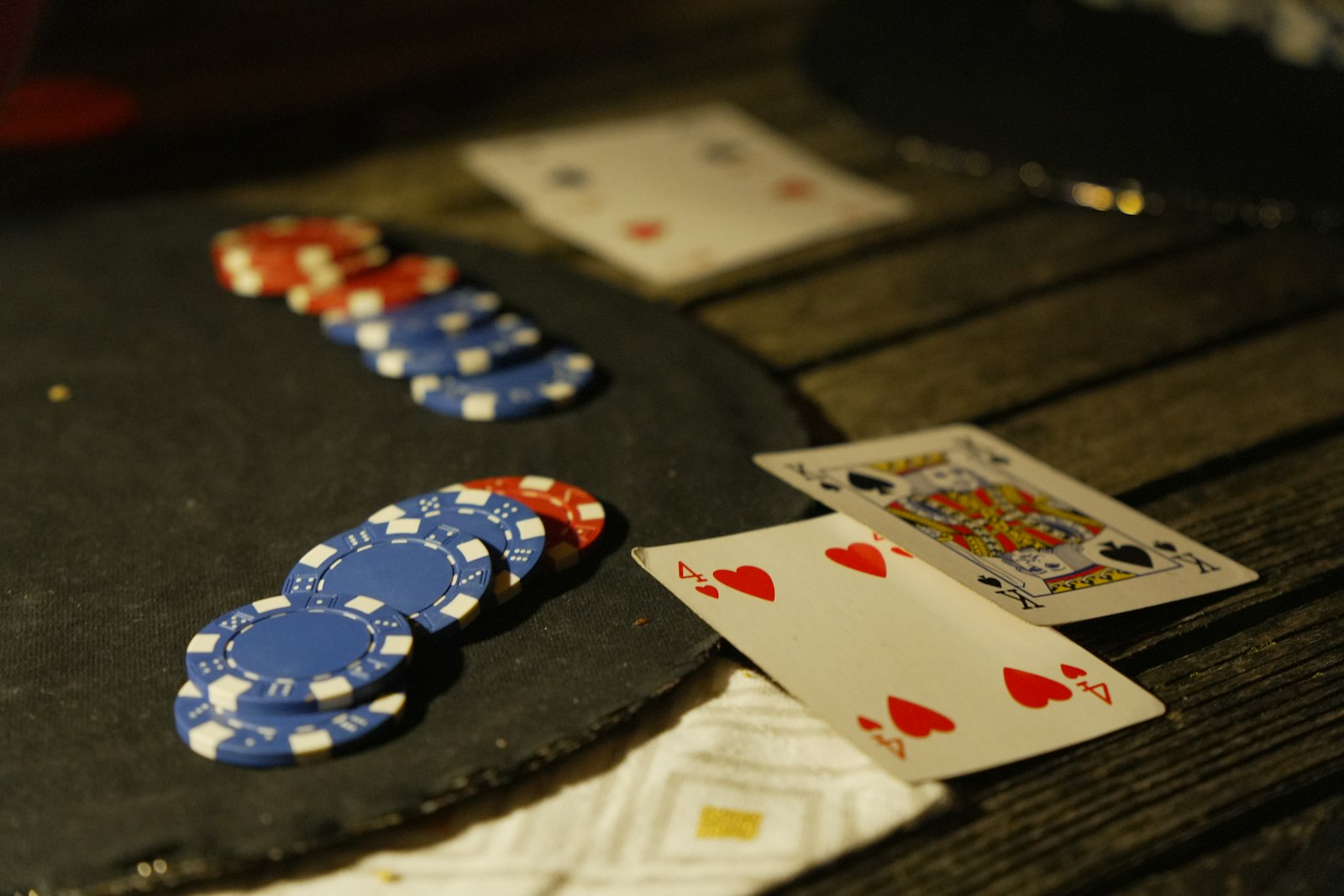
Most blackjack losses are caused by two forces: the normal house edge and random variance. But players can make the game substantially worse by adding avoidable mistakes. Poor table selection, incorrect basic strategy, taking insurance, overusing side bets, and betting too much can increase expected loss far beyond the casino’s built-in advantage. The good news is that these errors are controllable. Blackjack is one of the few major casino games where player decisions directly affect the mathematics. This guide expands on five common blackjack mistakes and shows how better rule selection, strategy, and bankroll discipline can reduce unnecessary losses.
Mistake 1: Choosing a Bad Blackjack Table
Many players sit at the first open table without reading the rules. That can be expensive. A 6:5 blackjack payout, dealer hitting soft 17, restricted doubling, no surrender, or poor split rules can increase the house edge before the first card is dealt.
Table selection is a strategic decision. Check blackjack payout first. A natural should ideally pay 3:2 rather than 6:5. Then look at dealer soft-17 rule, double-after-split, surrender, deck count, and minimum bet. For card counters, penetration and shuffle method also matter.
Why 6:5 Blackjack Is a Major Mistake
A $10 blackjack at 3:2 pays $15. At 6:5 it pays only $12. That three-dollar difference occurs every time the player receives a natural blackjack.
Because naturals occur often enough, the lower payout significantly increases house edge. A cheap $5 6:5 table can be worse value than a $10 3:2 table. If bankroll cannot support the better table minimum, reducing play frequency may be better than accepting a poor payout.
Do Not Assume Single Deck Means Good Rules
Casinos often market single-deck blackjack because players associate fewer decks with a lower house edge. But many single-deck games compensate with 6:5 payout or other restrictions.
Evaluate the whole rule set. A six-deck shoe with 3:2 payout and favorable rules can be much better than a single-deck promotional table with weak terms.
Mistake 2: Playing Without Basic Strategy
Blackjack basic strategy tells the player when to hit, stand, double, split, or surrender based on the cards and table rules. Guessing increases house edge because human intuition is poor at evaluating close expected-value decisions.
A player who stands on every hard 16 because busting feels bad may lose more over time than a player who follows the correct hit or surrender decision. Strategy removes emotional bias.
Why Fear of Busting Creates Bad Decisions
Busting is visible and immediate, while standing on a weak total and losing to the dealer feels less self-inflicted. This psychological difference causes players to stand too often.
Basic strategy compares the full probability tree. Sometimes taking a card and risking a bust loses less on average than standing with a weak total against a strong dealer upcard.
Why Refusing to Double Is Expensive
Doubling allows the player to increase the wager in favorable situations. Players with undersized bankrolls sometimes refuse to double because they are afraid to risk more money.
If the strategy calls for a double, declining usually gives up expected value. Choose a base bet small enough that proper doubles and splits remain financially comfortable.
Why Incorrect Splitting Hurts
Pair splitting is one of the most commonly misplayed parts of blackjack. Players split tens because they want two winning hands, refuse to split eights because they fear doubling the wager, or split fives that should be played as a strong hard 10.
Use a strategy chart. The correct split decision depends on the pair, dealer upcard, and rules such as double after split.
Mistake 3: Taking Insurance Without a Count Advantage
Insurance is offered when the dealer shows an ace. It pays if the dealer has a ten-value card in the hole. For a basic-strategy player, the price is generally unfavorable.
Insurance feels protective, especially when the player has a large original bet or a strong hand. But the side bet should be evaluated independently. Without card-count information showing an unusually high concentration of tens, insurance usually increases expected loss.
Even Money Is Still Insurance
When the player has blackjack and the dealer shows an ace, the casino may offer even money. Players often treat this as a special safe option.
Mathematically it is equivalent to taking insurance on the natural. A basic-strategy player generally declines. Card counters may take it at the appropriate true count.
Mistake 4: Overusing Side Bets
Modern blackjack tables can offer several side bets: Perfect Pairs, 21+3, Lucky Ladies, Bust It, progressives, and others. These wagers can be entertaining but often carry higher house edges than the main game.
A $25 blackjack bet plus two $10 side bets creates $45 of total exposure per round before doubles or splits. Even if the main game is excellent, the combined expected loss can rise sharply.
Why Side Bets Feel Attractive
Side bets offer large payouts, colorful displays, and immediate excitement. A 30:1 or 100:1 prize looks more dramatic than a normal blackjack win.
The payout does not tell you the probability. A large prize can still be poor value if the winning combination is sufficiently rare. Check the published paytable and house edge when available.
Mistake 5: Poor Bankroll Management
A player can use perfect basic strategy and still lose a session because blackjack variance is real. Betting too large relative to bankroll creates a high probability of ruin.
A bankroll should contain enough base units to handle losing streaks and extra wagers from doubles and splits. If the base bet consumes 10% of the bankroll, a short sequence can end the session before strategy has any chance to matter.
Chasing Losses
After losing several hands, players often double the base bet to recover faster. This is not the same as card counting. The deck does not become favorable merely because the player is down.
Chasing increases exposure when emotional control is weakest. Keep the planned bet unless a legitimate strategy variable such as true count changes it.
Martingale and Blackjack
Martingale-style progression increases the wager after losses in an attempt to recover all previous losses with one win. Blackjack tables have limits, bankrolls are finite, and losing streaks occur.
The progression changes the distribution of outcomes but does not remove house edge. A long streak can create a catastrophic loss.
Flat Betting for Recreational Players
Flat betting keeps the base wager constant and makes bankroll control easier. It does not create an advantage, but it prevents emotional bet escalation.
Card counters vary wagers for a mathematical reason tied to deck composition. Recreational players do not gain that edge by mimicking the bet spread without maintaining a count.
Additional Mistake: Playing Too Fast
Heads-up blackjack can produce many hands per hour. A low house edge multiplied by large wagering volume still creates meaningful expected loss.
If entertainment is the goal, a full table may reduce hands per hour and slow expected dollar loss. Faster action is not automatically better.
Additional Mistake: Drinking Too Much
Alcohol can reduce strategy accuracy and increase risk-taking. Free drinks are not valuable if they lead to expensive decisions.
If you plan to play seriously, stay clear enough to follow basic strategy and bankroll rules. The casino does not reimburse mistakes made while intoxicated.
Additional Mistake: Blaming Other Players
Players often believe someone who “takes the dealer’s bust card” caused the table to lose. Without knowledge of future cards, another player’s deviation is just as likely to help as hurt in the next sequence.
Over time, other players’ mistakes do not systematically change your expected value. Focus on your own strategy.
Additional Mistake: Leaving a Good Table for a “Hot” Table
Short-term winning streaks do not prove a table is hot. The rules determine expected value, not the recent scoreboard.
A 3:2 table with favorable rules remains mathematically better than a 6:5 table that happened to produce several recent winners.
Additional Mistake: Playing a “Cold” Dealer Differently
Dealers do not control card order. A dealer who has beaten the table repeatedly is not causing the outcomes.
Changing basic strategy because a dealer feels lucky or unlucky introduces errors without improving probability.
Additional Mistake: Ignoring Surrender
Late surrender can save half a wager in a few poor situations. Players sometimes refuse because giving up feels weak.
The decision is mathematical, not emotional. If surrender is available and the correct strategy calls for it, using the option reduces expected loss.
Additional Mistake: Using the Wrong Basic Strategy Chart
Strategy changes slightly by deck count and rules. A chart for single deck, dealer stands on soft 17, may not be perfectly correct for an eight-deck game where the dealer hits soft 17.
Use a chart or trainer matched to the table. The major decisions remain similar, but small deviations matter over volume.
Additional Mistake: Failing to Notice Rule Changes
A casino can change a table from 3:2 to 6:5, raise the minimum, remove surrender, or change soft-17 policy. Regular players may sit down automatically without noticing.
Read the felt and placard every session. Familiarity with the casino does not guarantee the rules stayed the same.
Additional Mistake: Treating Comps as Profit
Casino loyalty rewards can add value, but a free meal does not erase gambling loss dollar for dollar unless you would have purchased the meal anyway.
Do not increase blackjack volume to chase tier status or a room. Compare the expected cost of play with the actual value of the comp.
Additional Mistake: Buying In Too Small
A tiny buy-in relative to table minimum can create pressure to avoid correct doubles and splits. If the table minimum is $50 and you buy in for $200, one split and double can consume most of the bankroll.
Choose a lower-limit table or larger planned bankroll rather than playing correct strategy only when it feels affordable.
Additional Mistake: Buying In Too Large Emotionally
Bringing the entire gambling bankroll to the table can make it easy to continue after a planned loss limit. A separate session bankroll creates a stronger boundary.
Leave reserve funds away from immediate reach when possible. Convenience can undermine discipline.
Additional Mistake: Not Tracking Results
Memory exaggerates big wins and painful losses. Record date, casino, table rules, average bet, hours, starting bankroll, ending bankroll, and comps.
For card counters, add penetration, estimated hands, bet spread, and any casino countermeasures. Records reveal whether actual play matches the intended strategy.
Additional Mistake: Assuming Basic Strategy Means Winning
Basic strategy minimizes house edge but does not eliminate randomness. A perfect player can lose 20 hands in a bad stretch.
Accepting variance is part of disciplined blackjack. Do not abandon strategy because it failed during one session.
Additional Mistake: Counting Cards Before Mastering Basics
Card counting adds running count, true count, bet spread, and index deviations. If basic strategy is not automatic, the cognitive load creates mistakes.
Learn one layer at a time: rules, basic strategy, running count, true count, then deviations and betting.
Additional Mistake: Overbetting Positive Counts
A high true count can create a player edge, but the edge is still small compared with the size of normal hand variance. An all-in bet is not justified.
Use a predetermined bet ramp supported by bankroll and risk-of-ruin analysis.
A Better Blackjack Routine
Before sitting down: verify 3:2 payout, soft-17 rule, deck count, surrender, and double-after-split. Choose a base bet that allows correct doubles and splits. Keep a strategy card if permitted.
During play: follow strategy, ignore streaks, skip insurance without count justification, control side bets, and stop at the planned bankroll or time limit. After play: record results without changing the strategy based on one session.
Expected Cost of Mistakes
Suppose a strong blackjack table has about a 0.5% house edge under correct strategy. Frequent errors, 6:5 payout, side bets, and poor decisions could push effective expected loss several times higher.
At $10,000 of total wagering, the difference between a 0.5% and 2% effective edge is roughly $150 in theoretical loss. Over repeated sessions, table selection and decision quality matter.
Responsible Gambling and Blackjack Mistakes
The biggest mistake is gambling beyond financial or emotional limits. No strategy justifies using money needed for bills or trying to recover an urgent loss.
If blackjack becomes difficult to control, stop and use responsible-gambling tools. A small house edge does not make the game safe from harm.
Frequently Asked Questions About Blackjack Mistakes
What is the worst blackjack mistake?
Regularly playing 6:5 blackjack or ignoring basic strategy can materially increase expected loss. Poor bankroll management can be even more damaging financially.
Does another player’s bad hit hurt me?
Not systematically. Without knowing future cards, another player’s deviation can help or hurt randomly.
Should I take insurance?
Basic-strategy players generally decline. Card counters may take it at specific count thresholds.
Are side bets bad?
They are usually higher-house-edge wagers than main blackjack. They can be entertainment, but understand the cost.
Should I double my bet after losses?
No. A losing streak does not make the next hand more likely to win.
Final Takeaway
The easiest way to improve blackjack results is to stop giving the casino extra edge. Choose good rules, use accurate basic strategy, avoid unnecessary insurance and side bets, and size the bankroll so correct doubles and splits are always possible.
Then accept variance instead of chasing it. Continue with Blackjack Strategy, the Blackjack Edge Trainer, and Advantage Play at Santi Casino Quest. Blackjack involves risk, and no strategy guarantees profit.

Leave a Reply