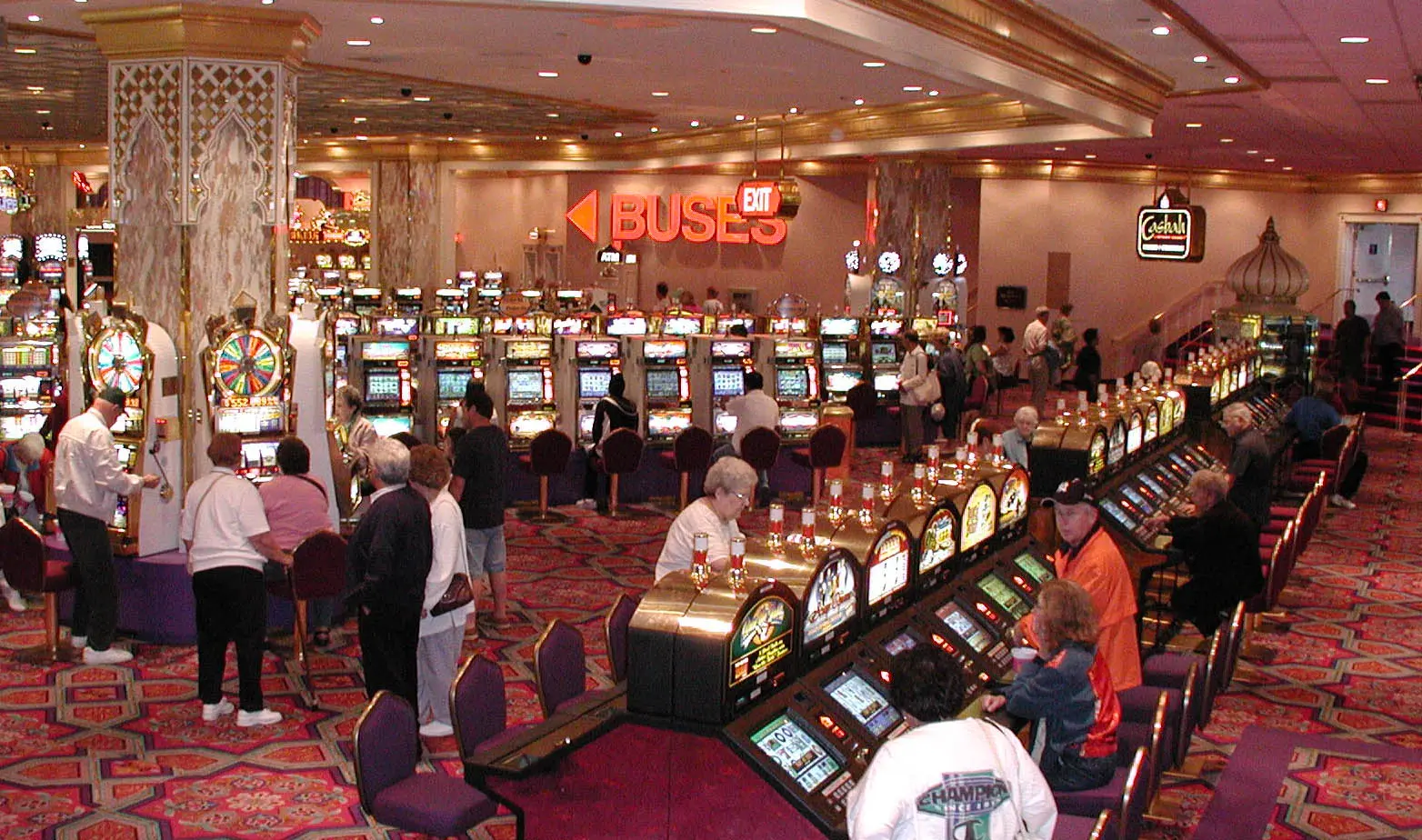
High-limit slot rooms create one of the strongest psychological signals on a casino floor. The lighting is quieter, the chairs are larger, cocktail service is often faster, the machines may have higher denominations, and the entire space is designed to make the player feel that bigger action receives a better experience.
That leads to an important question: Are high-limit slots actually better than regular slots?
The answer is more complicated than “higher denomination pays better.” Some casinos and markets have historically shown stronger average payback on higher-denomination slots, but that does not mean every high-limit machine has a higher RTP than every penny or nickel game. Game configuration, denomination, volatility, progressive structure, manufacturer, jurisdiction, and casino strategy all matter.
This guide compares high-limit slots with regular slots from a player-value perspective. We will look at RTP, volatility, denomination, bankroll, comps, hosts, jackpots, session length, free play, and whether the extra risk is justified.
What Counts as a High-Limit Slot?
There is no universal definition. A $5 denomination machine may be considered high limit at one regional casino and ordinary play at a major Las Vegas property. Modern video slots can also be misleading because denomination and total wager are not the same thing.
A one-cent game can allow a $25, $50, or larger total bet. A $5 reel slot may require only one or two credits. The important number is the total amount wagered per spin.
High-Limit Slot Rooms Are Designed Around Player Value to the Casino
Casinos invest in dedicated high-limit spaces because high-value customers can generate significant theoretical loss. A player betting $25 per spin can produce thousands of dollars in coin-in quickly.
The casino may justify premium service because the expected revenue from the player is higher. Dedicated cages, private restrooms, hosts, premium drinks, reserved machines, faster handpay service, and complimentary food are all part of the reinvestment model.
Do High-Limit Slots Have Better RTP?
Sometimes, but never assume.
Aggregate regulatory data has historically shown that higher-denomination slot categories can have lower casino hold percentages in some markets. That can happen because casinos use stronger payback schedules to attract high-value players or because the game mix is different.
But aggregate statistics do not reveal the exact RTP of the machine in front of you. A high-limit slot can still have a poor configuration. A low-denomination game can still have a strong RTP.
Read our slot RTP guide before treating denomination as a shortcut for payback.
A Better RTP Does Not Mean a Cheaper Session
This is one of the most important points.
Suppose a regular slot has a 92% RTP and you bet $1 per spin. A high-limit machine has a 96% RTP but you bet $25 per spin. The high-limit machine has the better percentage, but the expected dollar loss per spin is much larger.
At $1 with an 8% theoretical edge, expected loss is eight cents per spin. At $25 with a 4% edge, expected loss is $1 per spin.
The higher-RTP game is mathematically better per dollar wagered, but far more expensive at the actual bet size.
High-Limit Slots Can Generate Theoretical Loss Very Quickly
Casino loyalty programs often rate slot players based on coin-in and an assumed hold percentage. This means higher bets can generate comps and host attention faster.
That sounds attractive until you remember why the rewards are increasing: the casino expects to earn more from your play.
A player should never treat faster tier earning as a reason to increase denomination.
Volatility Can Be Brutal at Higher Bet Sizes
Volatility describes the size and frequency of bankroll swings. A high-volatility game can go through long dry stretches even if its long-run RTP is reasonable.
On a $1 bet, twenty losing spins cost $20. On a $25 bet, the same sequence costs $500.
The probabilities may be identical. The emotional and financial impact is not.
Classic High-Denomination Reel Slots vs Modern High-Limit Video Slots
High-limit rooms often contain both traditional reel games and modern feature-heavy video slots. These can behave very differently.
Classic reel games may have fewer bonus features and clearer pay tables. Modern high-limit video slots can include hold-and-spin features, linked progressives, multipliers, free games, and jackpot meters.
Do not assume a classic cabinet is low volatility or that a modern machine is automatically worse. The payout distribution is game-specific.
High-Limit Progressives
Progressive jackpots can make high-limit play especially tempting. A larger denomination may produce a larger jackpot or unlock eligibility for certain prize levels.
The correct question is not “How big is the jackpot?” It is “What is my expected cost of taking enough spins to have meaningful exposure?”
Read our progressive jackpot slot guide for a deeper explanation.
Does Betting More Improve Your Odds?
Sometimes a larger wager unlocks additional paylines, jackpot eligibility, or a different pay table. Other games simply scale the prize proportionally.
Never assume the biggest bet produces a better percentage return. Check the help screen and pay table.
If a $10 wager pays ten times the $1 prize for every outcome, the expected percentage may be unchanged even though the dollar swings are larger.
Why High-Limit Rooms Feel “Looser”
Players often report that high-limit machines feel looser. Several factors can create that perception:
- Higher bet sizes produce larger visible wins.
- Premium drinks and service improve the emotional experience.
- There may be fewer machines and less visual noise.
- Some denominations may have better average payback.
- Large handpays are more common simply because the wagers are larger.
None of this proves a specific machine is favorable.
Comps Are Usually Better Because the Expected Cost Is Higher
High-limit players can earn stronger rooms, free play, food, transportation, events, and host attention. That is real value.
But comp value must be compared with expected loss. A $500 room and $300 dinner package may feel generous, but if the play required to earn it carries $2,000 in theoretical loss, the casino is still in a strong position.
Use the framework in our casino comps guide.
Free Play in High Limit
High-value slot players can receive substantial free-play offers. That can materially reduce expected cost if the promotion is strong relative to the required action.
However, free play can also become a trap if players increase wagering to protect future offers. Never risk an extra $5,000 just because you expect another $500 promotion next month.
Casino Hosts and High-Limit Slots
High-limit slot players are more likely to qualify for host service because their action is easy to track. Hosts can arrange rooms, dining, events, and other benefits.
A host can improve the trip, but the host should not determine your bankroll. Our casino host guide explains how player-development relationships work.
How Much Bankroll Do High-Limit Slots Require?
There is no universal answer because volatility varies. A useful approach is to think in betting units.
A $5,000 bankroll at $25 per spin gives only 200 raw betting units before wins are recycled. A $1,000 bankroll at $1 per spin gives 1,000 units.
That does not mean 1,000 units guarantees a long session. It simply shows how quickly high-limit bets consume bankroll capacity.
Session Length Matters
Players often focus on how much money they brought, but time matters too. A fast slot player can make hundreds of spins per hour.
At $25 per spin and 400 spins per hour, total coin-in is $10,000 per hour. Even a 4% theoretical house edge represents $400 in expected loss per hour.
Actual results can be much better or worse, but the scale of the action becomes obvious.
High-Limit Slots and Handpays
Higher bets naturally make taxable handpays more common because ordinary pay-table wins can cross reporting thresholds more easily.
In 2026, federal W-2G reporting thresholds changed for certain gambling winnings, including slot-machine wins. Players should still keep accurate records because tax obligations are not limited to whether a W-2G is issued.
Do High-Limit Players Get Faster Handpay Service?
Many high-limit rooms provide dedicated attendants or cages, which can reduce waiting. Service speed is part of the premium experience.
But speed is operational, not mathematical. Faster handpays do not improve the game’s expected value.
High-Limit Slots vs Video Poker
High-limit rooms often include video poker. This is important because video poker is strategy-dependent and can have dramatically different pay tables.
A good full-pay video poker game played correctly can have a much lower house edge than many slot machines. A poor short-pay version can be significantly worse.
Do not assume every machine in the high-limit room is a slot or that every machine has similar economics.
High-Limit Slots and Tier Points
Higher action can generate tier points quickly. This can make elite status feel attainable in a single trip.
Before chasing a tier, calculate the value of the benefits. Free parking, lounges, priority lines, waived resort fees, and annual gifts can be useful, but they may be worth far less than the gambling cost needed to earn them.
When High-Limit Slots Can Make Sense
High-limit play may make sense if:
- Your bankroll comfortably supports the denomination.
- You have verified a stronger payback schedule.
- You receive targeted promotions that materially improve value.
- You value the premium service and comps.
- You understand the volatility.
- You can stop at a predetermined loss limit.
When High-Limit Slots Make No Sense
They are a poor fit if:
- You are increasing the bet only to earn comps.
- You are chasing losses.
- You do not know the machine’s volatility.
- Your bankroll supports only a small number of spins.
- You assume high denomination guarantees better RTP.
- You are playing because the room feels prestigious.
Regular Slots Can Offer Better Bankroll Control
Lower bet sizes give players more units and more control over session length. Even if the theoretical RTP is slightly lower, a smaller wager may create a much cheaper entertainment experience.
This is why percentage return should never be analyzed without dollar exposure.
But Low-Denomination Slots Can Have Their Own Problems
Low-denomination video slots can have complex bet structures, high volatility, and weaker payback configurations. A game labeled one cent can still cost several dollars per spin.
Always look at total wager and pay table, not the denomination label.
How to Compare Two Slot Machines
When comparing a high-limit machine with a regular machine, record:
- Total bet per spin.
- RTP if available.
- Volatility.
- Progressive contribution.
- Maximum win.
- Free-play eligibility.
- Tier earning.
- Comps.
- Your realistic number of spins.
Then compare expected dollar cost, not only percentage return.
High Limit and the Psychology of Status
Casinos intentionally make high-limit areas feel exclusive. Exclusivity can influence decisions. A player may bet more because they enjoy being recognized, receiving premium drinks, or having a host greet them by name.
Those benefits have entertainment value. Just price them honestly.
Do Not Let the Casino Define What “High Roller” Means to You
A casino may consider your play valuable even if you do not think of yourself as a high roller. The label should not change your bankroll.
If $10 per spin is already uncomfortable, do not move to $25 because a host or friend says that is where the “real” benefits start.
Bankroll Rule for High-Limit Slots
Set the maximum loss before entering the high-limit room. Divide the bankroll by the bet size. If the number of betting units is too small for the game’s volatility and your desired session length, lower the wager.
Our slot bankroll management guide provides a framework for session limits.
Final Verdict
High-limit slots are not automatically better slots. They can offer better service, stronger comps, larger jackpots, higher denominations, and sometimes better average payback. They can also produce enormous dollar losses very quickly.
The right comparison is expected dollar cost. A higher RTP does not help if the bet size multiplies your exposure beyond what the bankroll can support.
Play high limit because the math, promotions, bankroll, and experience make sense—not because the room makes you feel important.
Related SCQ guides: Slot RTP vs Volatility, Casino Theoretical Loss, and Casino Comps Explained.

Leave a Reply