Editorial note: This article examines the broader question raised by the Max Bet Omar controversy: can slot YouTubers use demo mode and still present responsible, credible gambling content? It discusses allegations made in 2026 against Max Bet Omar and other creators, but it does not treat those allegations as proven facts. The focus here is disclosure, audience understanding and the standards gambling creators should follow.
Demo mode itself is not the scandal. Slot manufacturers use it. Casinos use it. Trade shows use it. Game developers use it. Content creators can use it too. The real issue is what viewers are told.
When a machine is in demonstration mode, the screen can look almost identical to a cash game. Reels spin. Bonus symbols land. Jackpots flash. Balances rise and fall. A viewer can experience the same visual excitement without a single dollar being genuinely at risk. That makes demo mode a powerful production tool—and a potential transparency problem.
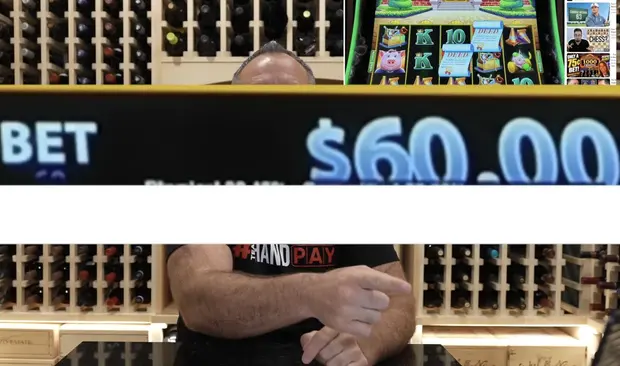
The 2026 Max Bet Omar controversy brought this distinction into mainstream gambling YouTube. Mr. Hand Pay accused Max Bet Omar, Alligator Capone and Spin Jim of using demo-mode or otherwise nonstandard slot setups while presenting videos in a way that critics believed implied authentic high-limit casino gambling. Whether every allegation is correct remains disputed. But the controversy exposed a larger weakness in the creator economy: viewers often have no standardized way to know what kind of gambling footage they are watching.
What Is Slot Demo Mode?
A demonstration mode is a non-cash operating state used to showcase, test or train on a slot game. Depending on the manufacturer and configuration, the cabinet can display balances, bets, wins, bonus rounds and jackpot events without taking real money from a player.
Manufacturers need demo functions because they cannot require technicians, regulators, casino buyers or convention attendees to gamble real money just to test software. Casinos also need controlled modes for setup and maintenance. Demo mode is therefore normal technology.
The problem appears only when an audience is encouraged to interpret demo credits as personal cash risk. The distinction between “this is what a $5,000 spin looks like” and “I am personally risking $5,000 right now” is enormous.
Why Demo Footage Can Be Useful
There are legitimate reasons for creators to use demonstrations. A reviewer may want to show a rare bonus without spending tens of thousands of dollars trying to trigger it naturally. A slot developer may invite a creator to preview an unreleased title. A mathematics channel may need controlled examples. A casino-news site may want to explain volatility or jackpot mechanics.
In those cases, demo mode can improve education. It allows the audience to see game features efficiently and safely. Nobody needs to pretend the play is cash.
The same principle exists in other industries. Car reviewers use simulators. Financial educators use paper-trading accounts. Poker coaches replay hypothetical hands. Sports analysts use models. Simulated examples are not deceptive when the simulation is disclosed.
Why Gambling Content Is Different From Ordinary Entertainment
Gambling video has one unique ingredient: money is part of the spectacle. A viewer is not simply watching a graphic. The viewer is watching what appears to be financial risk.
A $100 slot spin feels intense because the audience knows $100 can disappear. A $1,000 spin feels shocking because many people earn less than that in a week. A $5,000 spin can equal a mortgage payment or several months of household expenses.
Remove the real financial risk and the meaning of the image changes. The animation may remain identical, but the creator is no longer exposing himself to the same downside the viewer imagines.
That is why gambling creators need a disclosure standard stronger than “for entertainment purposes only.”
The Max Bet Omar Case Put Demo Mode Under a Microscope
Max Bet Omar became known for increasingly extreme slot wagers. Public videos advertised $3,000 max bets, $5,000 spins, six-figure bankrolls and huge feature buys. His own descriptions used phrases such as real high-stakes slots and, in at least one publicly indexed description, “REAL HIGH LIMIT SLOTS. REAL MONEY. REAL RESULTS.”
Then Mr. Hand Pay alleged that some content from Max Bet Omar and other creators appeared to show demo-mode indicators. SlotExpert amplified the accusation with screenshots and commentary. Reddit and Poker Fraud Alert users then began examining camera framing, jackpot sequences, overlays, reflections and location continuity.
Those observations are not a regulatory ruling. They remain allegations and interpretations. But they raised a fair question that applies to the entire industry: what should creators disclose when a video is not a conventional cash session on a public casino floor?
The Difference Between Demo Mode and Sponsored Money
Not all non-personal gambling funds are demo credits. A casino can provide free play. An online operator can provide a promotional balance. A sponsor can reimburse losses. A creator can sell action to backers. Friends can pool a bankroll. A slot manufacturer can offer a private demonstration.
These arrangements produce different levels of real risk. For example, a $10,000 promotional balance that can be converted into withdrawable cash after wagering has genuine value, even if the creator did not deposit the original $10,000. A non-withdrawable demo balance has no comparable cash value.
Creators often collapse all of these arrangements into the phrase “real money.” That is too vague. What viewers need to know is who bears the loss and whether the winnings can become real cash.
What a Good Disclosure Would Say
A proper disclosure does not need legal jargon. One sentence at the beginning of the video can solve most problems:
- “This is a manufacturer demo. No real money is being wagered.”
- “The casino provided $5,000 in promotional free play. I keep any cashable winnings.”
- “This is my own bankroll and I absorb all losses.”
- “The action is split 50/50 with a partner.”
- “This gameplay was recorded on a private machine for entertainment only.”
The exact wording can vary. The principle is simple: disclose the material fact that changes how the viewer interprets the wager.
Should Demo-Mode Videos Be Banned From YouTube?
SCQ does not think so. Demo content can be educational, entertaining and useful. Banning it would remove legitimate reviews, previews and technical explanations.
The better solution is labeling. Platforms already distinguish paid promotions, altered media and age-restricted content. Gambling creators could voluntarily adopt an industry convention such as “REAL MONEY,” “SPONSORED BALANCE” or “DEMO PLAY” in the first few seconds and in the description.
Clear labels would also reduce false accusations. A creator who openly marks a demo video cannot reasonably be accused of secretly pretending it is cash play.
Why Tiny Disclaimers Are Not Enough
A disclosure should be prominent enough that an ordinary viewer sees it before forming the wrong impression. Burying a sentence at the bottom of a long description after affiliate links, merchandise links and social profiles is weak disclosure.
The most important context should appear early. If the title says “I risked $200,000,” a viewer should not have to scroll through twenty lines to learn the balance was simulated.
The same applies to casino location. If an intro is filmed in a recognizable casino and the gameplay is filmed later on a private machine, a simple on-screen caption can prevent the audience from assuming continuity that does not exist.
Can Editing Make Real Gambling Look Suspicious?
Yes. Heavy editing can create red flags even when the underlying session is genuine. Creators cut dead time, crop other patrons for privacy, mute music for copyright reasons and remove long handpay waits. A close-up on the screen may simply be better for mobile viewers.
This is why critics should be careful. A jump cut is not proof of demo mode. A missing attendant is not proof of a fake jackpot. A camera overlay is not proof that diagnostic text was intentionally hidden.
Evidence should be cumulative and specific. If critics identify an actual demo identifier, they should explain what it means and how they verified it. If they claim a wager was unavailable at a casino, they should provide reliable configuration information for that machine and time period.
What Does “Real Money” Actually Mean?
The phrase can describe several different situations. A creator might deposit personal cash, receive casino free play, use a sponsored online balance, play with investors’ money or be reimbursed through a content deal.
From a viewer’s perspective, these are not identical. If the creator loses $100,000 of personal money, that loss changes personal wealth. If a sponsor guarantees the loss, the emotional and economic exposure is different. If demo credits disappear, the loss may be meaningless.
SCQ recommends defining “real money” in terms of economic exposure: is the balance withdrawable, who owns it, and who ultimately absorbs the loss?
Why High-Limit Videos Need the Highest Standard
A $1 demonstration spin is unlikely to change a viewer’s understanding of wealth or risk. A $5,000 demonstration spin presented as personal money can.
High-limit content attracts clicks because the numbers are extraordinary. The creator benefits directly from the audience believing the wager is extraordinary. That makes transparency part of the value exchange.
If a creator wants to use extreme fictional stakes purely for entertainment, that can work too. But the fictional nature should be part of the premise, not a hidden technicality.
Demo Mode Can Distort the Perception of RTP and Volatility
There is another concern beyond money: viewers may infer that demonstration results represent normal game behavior.
Some demonstration environments are designed to showcase features quickly. Depending on the product and configuration, a demo can be set up for testing conditions that do not reflect ordinary casino frequency. Even when the mathematical model is identical, a short edited montage can make bonuses appear much more common than they are.
Creators should therefore avoid using demo footage to imply that a game “always pays” or that a particular bonus is easy to hit. If the demonstration is not running normal production probabilities, the disclosure should say so.
How Demo Content Can Encourage Jackpot Chasing
Slot videos often center on the emotional pattern of repeated losses followed by a huge feature. Editing compresses hours of gambling into minutes. Viewers may see many jackpots without experiencing the real-world cost, boredom and losing stretches required to produce them.
Demo mode can magnify this effect because the creator may be able to generate feature-rich footage without the same financial constraints. The viewer sees a stream of exciting events and can underestimate how unlikely or expensive they are in ordinary play.
This is one reason responsible gambling messaging should not be treated as a decorative footer. The content format itself can shape expectations.
The Casino’s Role in Creator Transparency
Casinos increasingly invite influencers to film, host meetups and promote properties. They therefore share responsibility for setting disclosure standards.
A casino can require creators to identify free play, comps and sponsored sessions. It can prohibit filming on training or demo equipment unless the demonstration is labeled. It can also publish clear creator-filming policies so viewers understand when special access is involved.
Transparent rules protect the casino from being associated with a creator controversy.
The Manufacturer’s Role
Slot manufacturers also have an interest in preventing demo footage from being mistaken for real wagering. Their games can become the subject of rumors about rigging, RTP or impossible wins when demonstration environments circulate without context.
Manufacturers could place unavoidable “DEMO — NO CASH VALUE” watermarks on demonstration configurations. If that label cannot be removed or covered easily, the risk of misleading footage decreases dramatically.
Visible demo branding would also protect creators because viewers could instantly understand the context.
What YouTube Could Require
YouTube already uses paid-promotion tools and age gates. Gambling content could benefit from a simple content declaration during upload: real-money gambling, sponsored gambling, demo/simulated gambling, or educational footage.
That label could appear near the video description in the same way sponsorship notices appear. The platform would not need to decide whether a creator’s strategy is good or bad. It would only require the uploader to classify the funding environment.
Enforcement would still be difficult, but a standard form would make deliberate misrepresentation easier to identify.
Why the Max Bet Omar Allegations Resonated So Strongly
Viewers had watched the stakes increase dramatically. They had been told the content was real high-limit gambling. Then critics presented images that they believed were inconsistent with ordinary public-casino play.
The allegation therefore connected with an existing audience question: how can anyone sustain this level of slot action?
That question alone does not prove fake gambling. Wealthy gamblers can sustain large action, and a creator may have business income invisible to viewers. But when authenticity is a major selling point, the audience will naturally scrutinize inconsistencies.
How Creators Can Prove Authenticity Without Doxxing Themselves
Some influencers argue that viewers are demanding intrusive financial proof. They do not need to publish bank statements or tax returns.
A few practical methods are enough: film the ticket insertion and cashout, show the casino environment in an uninterrupted pan, show the machine asset number where permitted, keep a short portion of the attendant interaction after a handpay, disclose sponsored funds and allow independent casino staff to confirm a creator event.
No method is perfect. But consistent transparency builds a pattern of credibility.
What Viewers Should Never Assume
Do not assume a creator is wealthy because a slot screen shows a large balance. Do not assume a jackpot is typical because it appeared in a ten-minute video. Do not assume the casino gave the creator favorable odds. Do not assume a demo accusation is true because many comments repeat it.
Most importantly, do not copy wager sizes based on what looks normal on YouTube. The economics behind the video may be completely different from your own.
SCQ’s Proposed Gambling Creator Disclosure Standard
SCQ would like to see five simple labels become standard:
- PERSONAL CASH: creator bears the financial loss;
- SHARED ACTION: bankroll is split with partners or backers;
- CASINO FREE PLAY: promotional credits are involved;
- SPONSORED BALANCE: operator or sponsor provides funds or reimbursement;
- DEMO / NO CASH VALUE: gameplay is simulated or non-withdrawable.
These labels are not perfect accounting. They are enough to stop the most important misunderstanding.
What the 2026 Controversy Proved—Even Without Proving the Allegations
The Max Bet Omar dispute proved that gambling YouTube lacks a shared language for authenticity. Viewers were forced to inspect screen corners and debate camera cuts because there was no standard disclosure answering the basic question.
That is a failure of the ecosystem, not just one creator. Any influencer could face the same controversy when stakes become extreme and production becomes sophisticated.
The solution is not more speculation. It is better labeling.
Final Word
Yes, slot YouTubers can use demo mode. They can make entertaining videos with it. They can review games, show rare features and create impossible high-limit scenarios for fun. There is nothing inherently wrong with that.
But a demo should look like a demo in the viewer’s understanding. If no real money is at risk, say so. If a casino supplies the bankroll, say so. If a sponsor absorbs losses, say so. If a private cabinet is used after a casino intro, say so.
The Max Bet Omar controversy became explosive because the audience felt it might have been asked to believe one economic reality while watching another. Whether every allegation ultimately holds up or not, the lesson is permanent.
Gambling content does not need to be less entertaining. It needs to be more transparent.

Leave a Reply