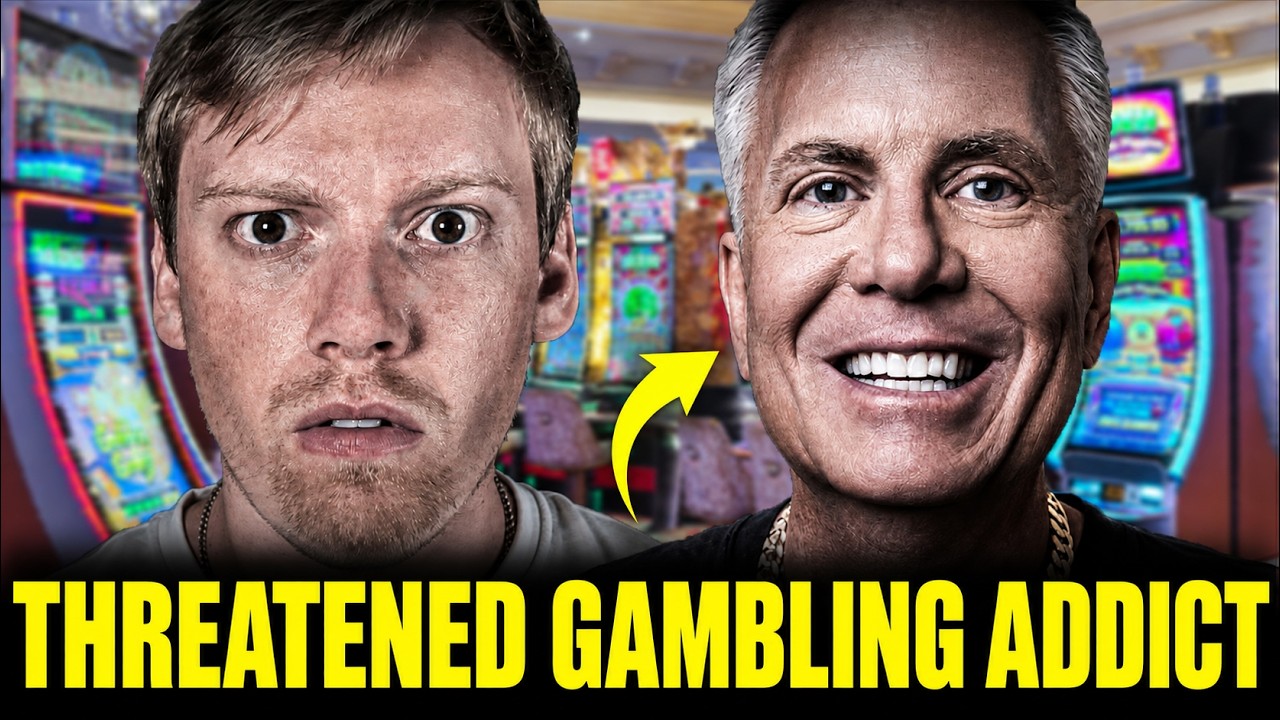
Editorial note: This article analyzes the 17-page legal demand letter sent on behalf of Vegas Matt to Rob Minnick, known as Rob ODAAT. It is not legal advice. A demand letter states one side’s claims and requested remedies; it is not a court ruling. SCQ does not independently conclude that ODAAT defamed Vegas Matt, nor does SCQ adopt ODAAT’s strongest labels as fact.
The most important document in the 2026 Vegas Matt vs. ODAAT dispute was not a YouTube thumbnail. It was a 17-page legal demand letter.
That letter transformed a creator argument into a serious reputational and legal conflict. It alleged that ODAAT’s video crossed the line from protected criticism into defamation, false light and interference with business relationships. It objected to words such as “fraud,” “scam” and “fake gambler.” It demanded corrective action and an apology.
Whether those legal claims would succeed in court is a separate question. What the letter clearly demonstrates is that gambling YouTube has become commercially important enough for creator criticism to trigger formal legal strategy.
What Is a Demand Letter?
A demand letter is a formal communication sent before or during a dispute. It lays out alleged wrongdoing, legal theories, requested remedies and often a deadline for compliance.
It can be used to resolve a conflict without filing a lawsuit. It can also preserve a record showing that the recipient was put on notice of the sender’s objections.
Receiving a demand letter does not mean the recipient has been found liable. Sending one does not mean a lawsuit will necessarily follow.
That distinction is essential because headlines sometimes blur “threatened lawsuit” and “won lawsuit.”
When Was the Vegas Matt Letter Sent?
Casino.com reported that attorney Jeffrey Herman sent the 17-page letter on August 17, 2026 on behalf of Vegas Matt, whose real name is Stephen Matt Morrow.
The letter followed a July video by Rob ODAAT criticizing gambling influencers and using Vegas Matt as a major example.
ODAAT refused the demands and later made the letter public, allowing readers to evaluate the legal arguments directly rather than through secondhand summaries.
What Statements Did the Letter Object To?
Public reporting said the letter focused on language including “fraud,” “scam” and “fake gambler.” It also objected to content that, in Vegas Matt’s view, could damage business relationships or falsely portray his gambling and commercial activity.
These words matter because they can be interpreted as more than insult.
“I dislike this creator” is obvious opinion. “This creator is a fraud” can be understood as alleging deceptive factual conduct. “Fake gambler” can be interpreted literally as an accusation that the gambling itself is staged.
Context determines how a reasonable audience might understand the wording.
Why “Fake Gambler” Became the Central Phrase
Vegas Matt’s channel brand emphasizes authenticity. Public descriptions of his channel highlight real gambling and the reality of wins and losses.
A “fake gambler” label therefore attacks exactly what the creator says distinguishes his content.
ODAAT’s apparent broader point was that creator economics make Vegas Matt’s relationship to gambling different from that of ordinary viewers. A large loss can become valuable content. Partnerships and media revenue can offset some costs.
But a viewer seeing only the phrase “fake gambler” may interpret it as “the gambling is not real.”
This gap between intended critique and possible audience interpretation sits at the heart of the dispute.
Defamation Requires More Than Hurt Feelings
Defamation law is complex and varies by jurisdiction, but generally involves false statements of fact communicated to others that harm reputation, plus the required level of fault.
Pure opinion is usually treated differently from a provably false factual assertion. However, simply adding “in my opinion” does not automatically protect a statement if the underlying message implies undisclosed defamatory facts.
The Vegas Matt dispute is therefore not resolved by asking whether ODAAT was “giving an opinion.” A court would potentially examine the exact words, context, audience understanding and factual basis.
Rhetorical Hyperbole
U.S. speech law often protects colorful, exaggerated language that a reasonable audience would understand as rhetorical rather than literal.
Words like “scam” can sometimes function as hyperbole in online commentary. In other contexts, the same word can communicate a concrete accusation of dishonest conduct.
This makes platform culture relevant. YouTube thumbnails routinely use dramatic labels for clicks. But commercial sensationalism does not erase legal consequences if the label conveys a factual accusation.
The False-Light Claim
The demand letter reportedly also alleged false light. False light claims generally concern publicity that places a person before the public in a misleading and highly offensive manner, though the cause of action is not recognized identically everywhere.
The theory differs from defamation but can overlap with reputational harm.
In the Vegas Matt context, the argument would likely focus on whether ODAAT’s presentation created a materially false impression of the creator or his business.
SCQ is not taking a position on whether the elements are satisfied.
Interference With Business Relationships
Public reporting also said the letter raised potential interference with business relationships.
That is significant because Vegas Matt is not merely an individual uploading hobby videos. He operates a substantial media brand with casino relationships, sponsorship opportunities and commercial partners.
If false statements cause a partner to terminate a relationship or refuse a deal, the claimed damages can extend beyond personal reputation.
Proving unlawful interference, however, requires more than showing that criticism exists. The legal details depend on the jurisdiction and facts.
Why Casino Partnerships Raise the Stakes
Gambling influencers can be commercially valuable to casinos. They bring audiences, social reach and attention to properties and games.
That means a label suggesting fraud or fake gambling could theoretically affect sponsorships, access or business negotiations.
At the same time, the existence of those relationships makes public commentary about conflicts of interest and gambling normalization more relevant.
Commercial importance increases both the potential damage from false claims and the public interest in legitimate scrutiny.
What Did Vegas Matt’s Side Demand?
According to public reports, the letter demanded that ODAAT edit or remove disputed content, take down promotional material and issue an apology by a deadline in late August.
These are common pre-litigation demands in reputation disputes. The goal is often to stop ongoing publication and obtain a correction before alleged damage grows.
ODAAT did not comply.
Why ODAAT’s Refusal Was Important
By refusing, Minnick signaled that he believed his commentary was defensible and that he was willing to face the risk of litigation.
He then made the letter public, which shifted the power dynamic. Instead of the threat remaining private, the audience could inspect the claims and debate them.
This created more attention for both sides.
Could Publishing the Letter Create Additional Risk?
Potentially. Making a legal threat public can intensify a dispute and create new statements that later become relevant.
But publishing a demand letter can also serve transparency, especially when a creator claims legal pressure is being used to silence criticism.
GamblingTruth.org made the redacted letter available publicly, giving journalists and viewers a primary source.
The Streisand Effect
The Streisand effect describes situations where attempts to suppress information draw more attention to it.
Vegas Matt’s letter may have had that unintended consequence. News sites that might never have covered ODAAT’s original video began reporting the dispute.
Casino.com, Casino.org, CardPlayer and gambling podcasts discussed the conflict. The legal response therefore amplified the original ethical critique even while challenging the language used to express it.
Why Large Creators Use Legal Letters Anyway
Despite the amplification risk, doing nothing also carries costs. Silence can allow a damaging label to spread unchecked.
A creator with sponsors and business partners may feel obligated to protect the brand formally, especially if the language suggests criminal or fraudulent conduct.
The decision is strategic: reputation protection versus publicity amplification.
Is Vegas Matt a Public Figure?
Vegas Matt is a highly visible online personality with a large audience and public commercial brand. Whether a court would classify him as a public figure, limited-purpose public figure or another category for a specific claim is a legal question.
Public-figure status can affect the level of fault a plaintiff must prove in U.S. defamation law.
SCQ will not predict that classification or the outcome of a hypothetical case.
Actual Malice Does Not Mean Personal Hatred
In U.S. defamation law, “actual malice” is a term of art generally referring to knowledge of falsity or reckless disregard for truth in certain public-figure cases. It does not simply mean that the speaker disliked the subject.
This is often misunderstood in internet debates.
If litigation ever occurred, evidence about ODAAT’s sourcing, wording, edits and belief in the truth of factual claims could become important.
Opinion Does Not Give Unlimited Protection
A commentator cannot necessarily avoid liability by saying “I think” before a concrete factual accusation.
For example, “I think he committed a specific crime yesterday” still communicates a factual proposition that can be checked.
By contrast, “I think his content is socially irresponsible” is much more clearly evaluative.
This is why critics should phrase claims according to the evidence they actually have.
What ODAAT Could Safely Criticize Strongly
ODAAT could analyze visible losses, public sponsorships, monetization, gambling normalization and the difference between creator economics and viewer economics.
He could argue that a $147,000 loss becoming profitable content creates a distorted incentive. He could say high-limit videos may make extreme wagering look normal.
These are arguments about observable content and social effects.
The greatest legal risk arises when criticism moves from those arguments to factual claims of deception or fraud without strong evidence.
What Vegas Matt Cannot Reasonably Expect
A large public gambling brand cannot expect freedom from harsh criticism.
Creators who normalize million-dollar bankrolls and casino partnerships will attract commentary about addiction, wealth, sponsorships and ethics.
Legal protection against false factual accusations is not protection against negative opinions.
That distinction matters just as much as the limits on critics.
The $147,000 Loss and Why It Was Relevant
ODAAT used a roughly $147,000 Vegas Matt losing session to demonstrate his broader thesis that creators can convert gambling losses into content value.
The loss is relevant to the ethical debate because it was public and because the creator business model can monetize attention around the loss.
The loss does not, by itself, prove any fraud or hidden reimbursement.
That is the line commentary should preserve.
Media Revenue Does Not Make a Loss Fictional
One of the weakest versions of the criticism would be: “Because Vegas Matt earns money from YouTube, the $147,000 loss was not real.”
That does not follow. A real expense can generate business value and remain a real expense.
A filmmaker can destroy a real car while producing a profitable movie. The car was still destroyed.
The better argument is that the creator has economic offsets and incentives unavailable to ordinary viewers.
Why This Distinction Matters Legally
Calling the economic context different is an analysis. Calling the event fabricated is a factual allegation.
If ODAAT intended the first meaning but used language audiences could understand as the second, that ambiguity becomes important.
It also shows why internet shorthand can be dangerous when commercial reputations are involved.
The Role of Thumbnails
YouTube thumbnails are advertisements. They are designed to communicate an emotional premise in a fraction of a second.
Words such as FAKE, SCAM and FRAUD are powerful click drivers. They are also legally loaded.
A creator can write a nuanced 40-minute video and still face scrutiny over a thumbnail that appears to make a much simpler factual accusation.
Commentary channels should treat thumbnails as publications, not decoration.
Could a Disclaimer Fix It?
A disclaimer such as “opinion and commentary” can help communicate context, but it does not automatically cure a false factual assertion.
The actual content still matters.
The safest practice is substantive precision: “I believe this business model creates misleading incentives” instead of “this person is a fraud,” unless reliable evidence supports the latter.
Why the Letter Matters for Smaller Channels
Small gambling commentators often assume large creators will ignore them. The Vegas Matt dispute shows that assumption can be wrong.
A video with a modest audience can trigger a formal legal response if it uses statements the subject believes damage a commercial brand.
Creators should therefore source criticism carefully even when they believe they are speaking truth to power.
Why the Letter Matters for Larger Channels
Large creators now know that sending a legal threat can become content itself.
ODAAT published the letter. News outlets covered it. The public debated the wording line by line.
Legal strategy and public-relations strategy cannot be separated in the creator economy.
Could the Letter Chill Legitimate Gambling Criticism?
That is one concern raised by viewers sympathetic to ODAAT. Smaller recovery channels may fear expensive legal defense even when they believe their criticism is protected.
This phenomenon is sometimes discussed in the context of strategic lawsuits against public participation, though whether any particular dispute fits a legal anti-SLAPP framework depends on jurisdiction and facts.
SCQ is not characterizing Vegas Matt’s demand as a SLAPP action.
Could ODAAT’s Language Harm a Legitimate Creator?
Yes, if viewers interpret unsupported labels as factual proof of fake gambling or fraud.
False accusations can cost creators sponsorships, casino access and reputation. The fact that a subject is wealthy or famous does not make false factual claims harmless.
Speech rights and reputation rights both matter.
How SCQ Will Cover Similar Disputes
SCQ will use attributed language: “ODAAT alleged,” “Vegas Matt’s lawyer argued,” “critics claim,” “the public source shows.”
We will distinguish documented behavior from conclusions about motive.
We will not use a dramatic label as a substitute for evidence.
This allows criticism to remain sharp without becoming careless.
What Happened With ODAAT’s Legal Fund
Rob Minnick publicly said supporters donated toward a legal defense fund and that he later closed the fundraiser after receiving an offer of legal representation if needed.
He said the money raised would be donated, with his own additional contribution, to the 988 Suicide & Crisis Lifeline.
This reinforced his framing of the conflict as connected to gambling-harm advocacy.
Does That Affect the Defamation Analysis?
No. Charitable actions, motives and personal recovery history do not determine whether a challenged statement is legally defamatory.
They are relevant to public context, not to the truth or falsity of specific claims.
Likewise, Vegas Matt’s commercial success does not determine whether criticism of him is legally protected.
Was the Letter a Win for Either Side?
Publicly, both sides could claim advantages.
Vegas Matt demonstrated that he would defend his brand and challenged the strongest accusations formally. ODAAT refused to retract and gained significant attention for his critique.
Without a final court outcome, calling either side the legal winner would be premature.
The Bigger Industry Lesson
Gambling YouTube is no longer a casual hobby ecosystem. It includes million-subscriber brands, casino partnerships, professional production, merchandise, sponsorships and recovery channels with their own audiences.
As money increases, disputes professionalize.
The 17-page demand letter is evidence of that maturation.
Final Word
Vegas Matt’s 17-page demand letter matters because it marks the point where gambling-influencer criticism collided directly with defamation law.
The central conflict is not difficult to understand. ODAAT wanted to attack what he sees as a harmful creator business model. Vegas Matt wanted to stop language that he believes falsely portrays him as dishonest or fraudulent.
Both goals can exist in a free-speech system. The challenge is drawing the line between harsh opinion and false factual accusation.
For gambling commentators, the practical rule is simple: criticize the economics, the public content, the disclosures and the social impact as aggressively as the evidence permits. When alleging deception, show the evidence. When the evidence is incomplete, say so.
That standard protects the audience, the critic and the subject.
Sources
- Casino.com — report on the 17-page demand letter
- Casino.org — defamation dispute coverage
- GamblingTruth — public redacted demand letter
- CardPlayer — Vegas Matt / ODAAT legal dispute
Related SCQ coverage: Vegas Matt vs ODAAT: Claims and Evidence, Vegas Matt $147,000 Loss Debate, and Full Dispute Timeline.

Leave a Reply